


Leading health disparities experts hope health institutions will take advantage of a new cancer health equity research volume recently released that curates the latest developments in how researchers can best address health disparities so all patients receive good quality care.
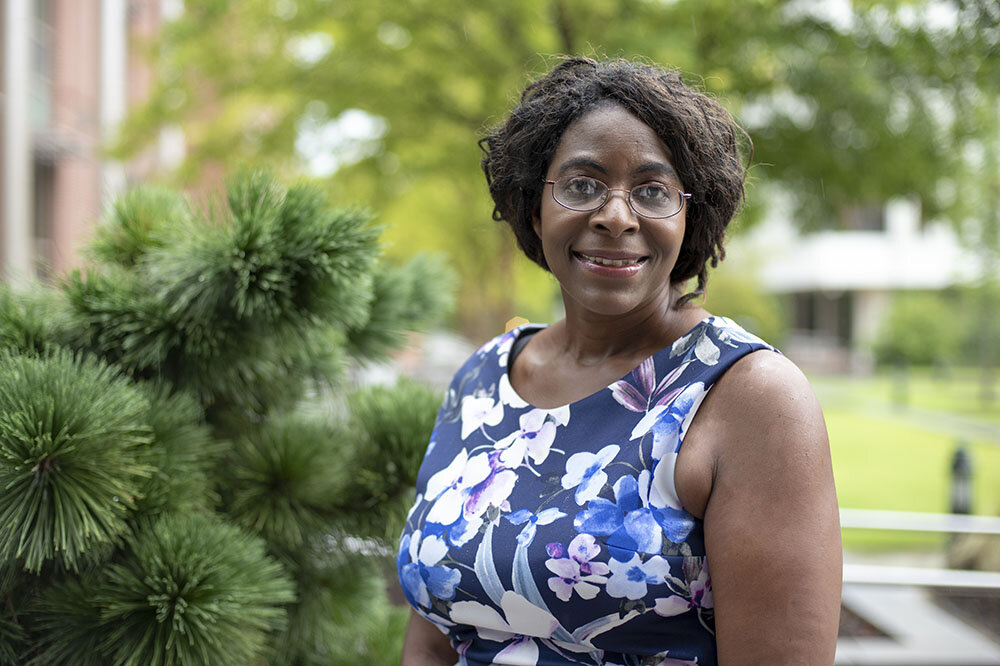
“This volume is important because it uses a health equity approach to focus on factors associated with cancer disparities research, and it identifies potential solutions to those disparities,” said Marvella Ford, Ph.D., professor of Public Health Sciences and associate director of population sciences and cancer disparities at the Hollings Cancer Center at the Medical University of South Carolina. “It brings together a spectrum of research from the basic sciences to the population sciences to address cancer health equity.”
Ford also is the SmartState Endowed Chair of Cancer Health Equity Research at South Carolina State University. She coedited the volume with Nestor F. Esnaola, M.D., of Houston Methodist, and Judith D. Salley, Ph.D., of South Carolina State University. Two of Ford’s studies were included in the recently released book, which is the edited journal volume, Cancer Health Equity Research (Volume 146 -Advances in Cancer Research).
Chapters three, four, six and seven of the volume represent Hollings’ studies by Ford and other colleagues. She also wrote the preface in Health Equity Research. The journal includes research that highlights the importance of including diverse populations in cancer research and suggestions for effective recruitment strategies. These studies are what Ford hopes will lead to better health outcomes for cancer patients, especially those who are disproportionately affected by cancer.
“Researchers can take this information, and they can design and implement their own interventions to reduce cancer disparities and promote cancer health equity,” Ford said.
Studies in the book reveal how better solutions can be found. One of the studies is part of Ford and Salley’s National Cancer Institute U54 PACHE or Partnerships to Advance Cancer Health Equity program and ties to the South Carolina Cancer Disparities Center grant. This research shows the impact of lifestyle on breast cancer risk. The study, originally published in Advances in Cancer Research, found that known breast cancer risks such as a higher body mass index, lower rates of physical activity and a type of cancer called hormone receptor-negative breast cancer appear to be more prevalent in African Americans without Sea Island/Gullah ancestry than in Sea Islanders.
Her other study published in Advances in Cancer Research, led by Hollings Cancer Center researcher David P. Turner, Ph.D., showed that mammary gland development is linked to breast cancer disparity, perhaps mediated through socioeconomic status and childbearing patterns, such as the age at which a young woman starts menstruating.
Ford said the newly released volume is important because these studies help researchers to pinpoint areas where specific health interventions could be developed.
“Cancer disparities are a major public health problem in the United States. The goal of cancer disparities research is ultimately to reduce and eliminate these disparities,” Ford said. “The synergy among the chapters is shown by their emphasis on the multiple factors that contribute to cancer disparities, ranging from social factors to biological factors.”
Marvella E. Ford et al, BMI, physical activity, and breast cancer subtype in white, black, and Sea Island breast cancer survivors, Cancer Health Equity Research (2020). DOI: 10.1016/bs.acr.2020.01.005
Citation:
Cancer health disparities published in new volume (2020, July 10)
retrieved 10 July 2020
from https://medicalxpress.com/news/2020-07-cancer-health-disparities-published-volume.html
This document is subject to copyright. Apart from any fair dealing for the purpose of private study or research, no
part may be reproduced without the written permission. The content is provided for information purposes only.

