


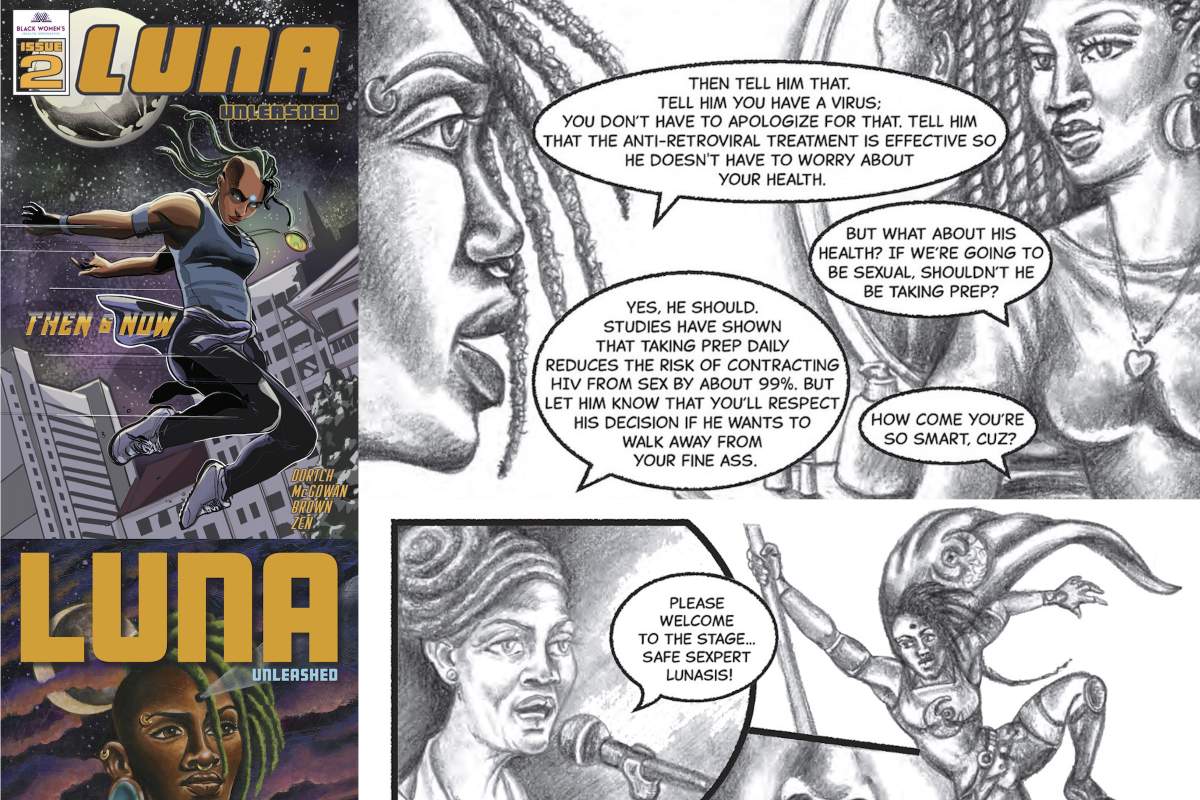
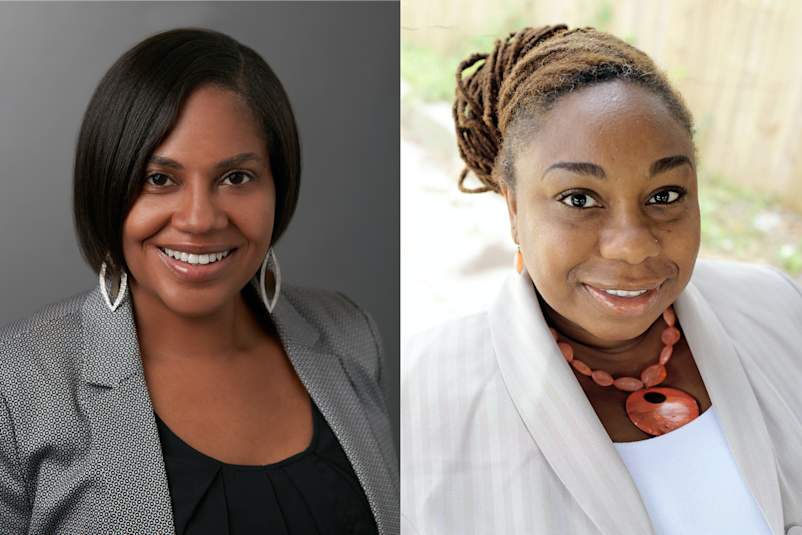
Black women are at the same time disproportionately impacted by HIV and frequently left out of the broader discourse on HIV prevention. Nakesha Powell, M.P.A.—an HIV/AIDS advocate for women and girls and the HIV program manager for the Black Women’s Health Imperative (BWHI)—and Giovanni N. Dortch, Ph.D.—an activist and certified HIV counselor and tester—are doing their part, creatively, to change that.
At the 2020 U.S. Conference on HIV/AIDS (USCHA), Powell and Dortch led an interactive workshop titled, “Comics as a Medium to Educate Black Women on HIV.” The workshop centered on Luna Unleashed, a first-of-its-kind comic book depicting cisgender and transgender Black women as superheroes who advocate for safer sex and HIV testing, awareness, and prevention—while also shedding light on a range of social justice issues impacting Black communities, including gentrification, food insecurity, and environmental racism.
Terri Wilder, M.S.W., recently spoke with Powell and Dortch (who co-wrote the comic book) about the creative vision behind Luna Unleashed, the response it’s received so far, and what’s next for a comic book that’s shifting the narrative on Black women and sexual health.
This transcript was edited for clarity and length.
Creating Luna, Super Sex Educator
Terri Wilder: Thanks so much to both of you for speaking with me today. Why did your team decide to create a comic rather than use another form of communication?
Nakesha Powell: The regular ways of the past seem to not really work or spark much interest. What I mean by that is that when we see brochures and pamphlets, how likely are we to read those if we have no direct interest? For instance, if there’s a breast cancer issue, or there’s a brochure or a pamphlet, we’ll pick that up and read it. But HIV is a topic that is not very palatable for the community at large, but even more so for Black women.
What we’ve seen is Black women are really at risk for contracting HIV. So, we decided to be innovative, not only introduce a new genre of literature, so to speak, when it comes to comics, but also the story line. That was the premise behind using a comic. It’s something to spark interest for Black women to be engaged in receiving health information.
Wilder: Let’s get into the process of developing the comic. How did you decide on the topics, and on the character Luna? How did you go about hiring an illustrator?
Powell: As far as hiring: Giovanni and I, we’ve worked for years in this space when it comes to sexual health and reproductive justice. She’s so deeply involved in this work. So, there was not a second thought in hiring Giovanni to script the comics out—and her husband is a designer. That partner duo was a perfect match in getting not only the written script, but the visual piece together.
Giovanni N. Dortch: When Nakesha and BWHI came to me, they already had the idea of a superhero that was an advocate for Black women. That’s something that we didn’t see much in the comics space. Of course, we’re all still on the high and low of Black Panther and then the loss of Chadwick Boseman. But we didn’t really see Black women superheroes. And, as Nakesha said, the topics were not really being addressed in ways that were accessible to everyone, especially since talking about HIV prevention is still such a taboo topic, especially in communities of color and especially among Black women.
The character Luna was created as a super sex educator—that was her first description. She uses her psychic abilities and parkour athletic capabilities to maneuver through her world and help the people in her community. Luna lives in Atlanta, so she’s situated very much in the real world, and she’s dealing with real-world problems.
We had that slight element of fantasy with the superpower, but also things that are very realistic. People do have powers: We call them “spiritual gifts” or “psychic powers.” It was very much to ground Luna in the real world.
Also, as the title implies, Luna Unleashed, there are no taboos for Luna. As we go through the comics, there are various characters that Luna makes contact with. We talk about everything from sexual activity to HIV testing to sexuality and people along the gender and sexuality spectrums. We address issues in the LGBTQIA+ community; things that people, especially Black communities, are going through, like gentrification, access to food and food security, and environmental racism. It’s a fully reflective story about what real people are facing in their real communities and how all of these things are interconnected.
We don’t think about the reality that there is a connection between domestic violence or intimate partner violence and HIV. We don’t connect the reality of medical racism to HIV, and why certain groups of people may not want to go to the doctor—because of the history of medicine in the United States. So, it was really important for us to be comprehensive and also to ground Luna in the real world, but also have her be a powerful person in her world.
She’s not a victim of the world that she’s in. Even the people that she comes into contact [with] in her world are not victims. They are co-creating. They are problem-solving together. There’s room for them to come up with their own solutions to their own problems.
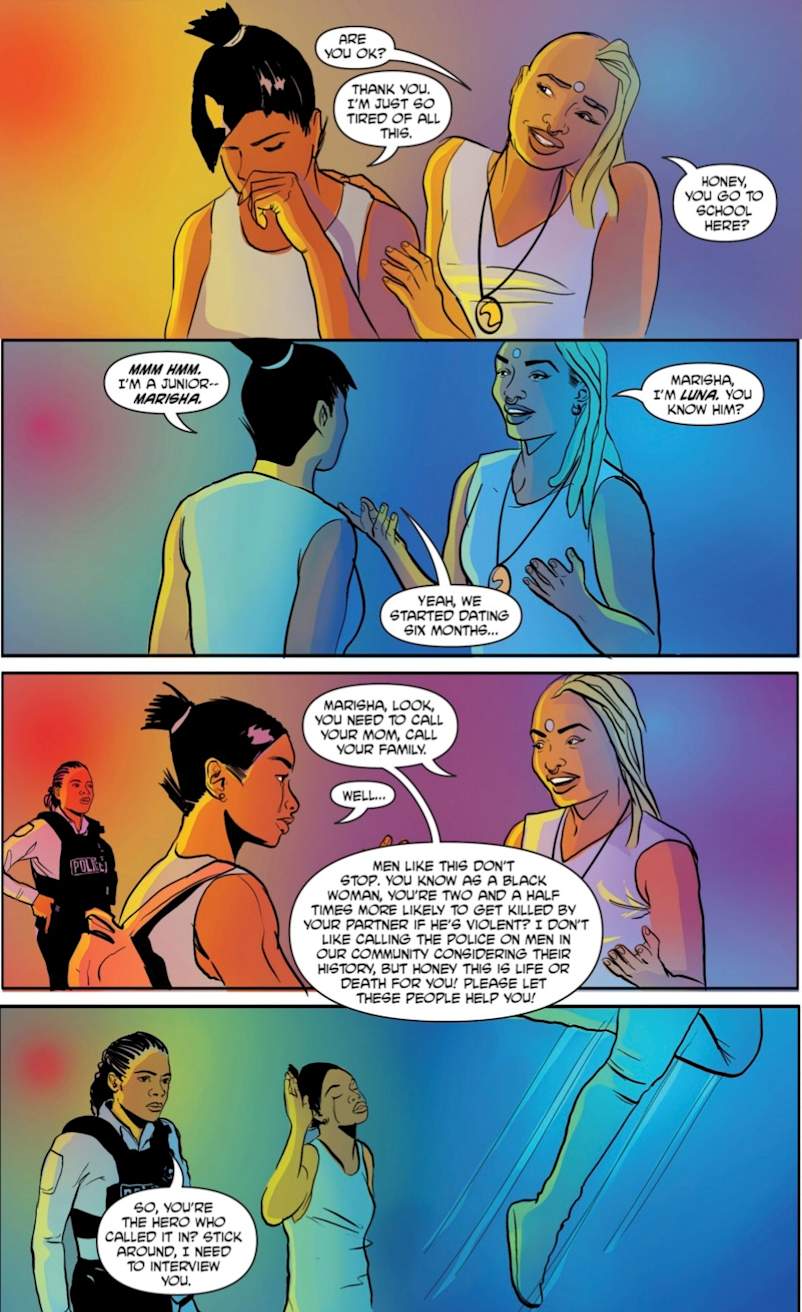
Her role really is that of the super sex educator, where she can give some data, some facts, some statistics, and then help the people that she comes into contact with make their own decisions.
Luna’s Representation of Black American Culture
Wilder: Luna is a nurse. How did the team decide to make her a nurse, and what was the purpose of that particular identity?
Powell: We decided to make her a nurse because it caused her to not only be knowledgeable about public health, but also having a passion around these topics. We look to share information, like who’s our trusted source. She also comes from a family of practitioners, with her mom owning a birthing center. So, that was a natural flow into Luna’s vocation.
Wilder: Luna also has a very punk vibe to her. What was the thinking behind making her have a kind of Afropunk appearance versus maybe more of a “conservative” look?
Powell: Well, it’s interesting that you call it an Afropunk vibe, where we call it a more ethnic look. Of course, we wanted all our characters to be relatable and represent African Americans. It’s timely. If you look at Luna’s hairstyle, which is in the locks style, that’s a common style for African-American women. Also, the shaving of the sides of the head concerns something that we’ve been doing with our hair for some time now.
The coloring is timely, as well. If you kind of peruse the social media, you’ll see lots of women with locks, and they play with the colors, from different shades to the bold colors. Even Giovanni—she has locks, and they have an ombré blondish tint to them. She’s played with color.
So, while it kind of could look like punk style, we really want it to be relatable and represent some of the ethnic style of Black women.
Wilder: I used the phrase Afropunk because I felt like one of you used that phrase during the presentation.
Dortch: It’s funny that you pulled that as the style, because Afropunk is a Black cultural event. It’s sort of a Black family reunion–style event, where there’s music, food, and vendors. It’s generally an outdoor event, and it really is a place where a lot of African-American people, who have to maintain a conservative style—because maybe they’re in corporate America or they’re in certain professions where they cannot fully express themselves—we know there have been cases of African-American people being fired because of their hairstyles.
Afropunk is an event where people literally get to let their hair down. They can wear their African print clothing, as opposed to having to wear corporate blue, brown, and black. They can wear their makeup however they want to wear it, as opposed to having to have muted colors maybe at work. And they can literally let their hair down, or wear their head wraps, or wear their natural hairstyles, or anything that is an authentic expression of who they are. In the first issue, we literally see Luna letting loose, getting into her authentic expression—which includes shaving and coloring her hair.
When you described it as punk, and then Afropunk, it’s very much like ’80s punk goes mainstream. When we think about the ’80s, and London and New York, and styles where you had a Black punk scene, you definitely see that reflected 40 years later in the next generation. What were once these fantasy hair colors have gone mainstream. In the early 2000s, there were only certain segments of the Black community engaging in these playful expressions. Now, that’s kind of gone mainstream, where we see it in the ’hood and in the suburbs. It’s definitely a vibe that has become much more mainstream. Afropunk is one of these cultural events where people get together and celebrate that. But for Luna, it’s an everyday event.
In the upcoming issue, we’ll actually have some discussion around that, and even the pushback that Luna gets around her appearance. We’re definitely bringing in that discussion of the politics of appearance, and especially for African-American people, and where we can and can’t express those dynamics. Even that texture, that presentation, becomes part of the story.
Luna’s Role as an HIV and Health Educator
Wilder: Luna is trying to communicate about prevention, sexual health, reproductive justice, and other intersections that increase a person’s risk for HIV—what is her overall message around these different topics?
Dortch: On the one hand, Luna is presenting the realities of the data around HIV. In a second way, the story presents new information around HIV.
What I’ve found, talking especially to older women, is that a lot of people still have the perception that an HIV-positive diagnosis equals a death sentence. They haven’t even heard about the prevention medications. They don’t know anything about U=U, which is undetectable equals untransmittable. They don’t know anything about the advances medically that have occurred to prevent the spread of the virus.
Then, on the other hand, which we learned through feedback from our research participants, a lot of people are not aware of just basic healthy relating dynamics. We include that in the story as well. There’s one scene where the friends are watching a horribly written movie. They’re actively critiquing what’s happening in the film, because it is one of the examples of bad relationship dynamics. In a later issue, we see that same scene replicated in the appropriate way, the healthy relationship dynamic way.
So, it’s teaching, not just about HIV, but also teaching about healthy relating, and then, of course, the factual medical information as well.
Wilder: Throughout the comic book, you provide additional resources. Why was it important for you to include that?
Dortch: We include resources at all levels of accessibility. Some resources are books. Some are actually medical articles. Some are websites. And some are just statistical data. We do that because we want Luna to be accessible across the age groups.
When we presented at USCHA, we talked specifically about how our research participants, when we did our focus groups, were aged 14 all the way up to age 56. That’s because we wanted Luna to be accessible.
Also, people need additional information. Comics are notoriously less heavy on the words and more heavy on the visuals. We wanted people to be able to go and do their own research and gather more information.
As we shared Luna more widely, we began to attract younger and younger audiences. We began to attract educators who said, “Hey, I’m going to bring this into my classroom.” In the South, there are many states that have abstinence-only education, which means students don’t get any information about their bodies, their health, and sexuality. But if you’re a literature teacher and you want to use this as a piece of literature, you can do that and still make sure kids get the information that they need. You’re teaching about writing and storytelling; you’re not necessarily teaching about sexuality or sexual health.
So, we wanted it to be accessible for all of our audiences. We wanted educators, as well, to be able to begin to build a resource bank for what they were teaching about, if they choose to use this in their classroom, and also make it accessible for organizations, like girls’ clubs, extracurricular clubs that are for young women, and also the collegiate crowd.
Frequently, college students get to write papers and explore concepts that they’re interested in. So we’ve kind of given them a little boost on getting their research started by providing those resources.
How Luna Unleashed Acknowledges America’s History of Forced Sterilizations of Black Women
Wilder: In one of the comics, there’s a reference to Fannie Lou Hamer. Who was she, and why was it important to include her story in the comic?
Dortch: It’s awesome that you bring that up. Fannie Lou Hamer was a Black woman activist out of Sunflower County, Mississippi. She got involved in the voting rights movement because she was a sharecropper and her family was, of course, economically oppressed by the sharecropping system of the South. Every detail of their lives as poor Black people in the rural South was dictated by wealthy white men.
When the voting rights movement came to the South, Hamer got involved in that movement. She was regularly penalized for her involvement. She went to a church where they taught people how to register to vote. They prepared people for registration. This was also at the time where you had voter suppression going on—again, a relevant issue right now. Black people would be physically threatened. Their livelihood would be threatened, their children, their families, their churches. Any community association could be threatened by that person registering to vote, or even just learning how to register to vote.
This was also at the time where frequently voters would have to take literacy tests, or they would have to interpret a portion of the state constitution. You could talk to an attorney today and they’d probably have difficulty interpreting their state’s constitution. But they forced poor Black people, many of whom were illiterate, to engage in those kinds of behaviors, just to get their right to vote.
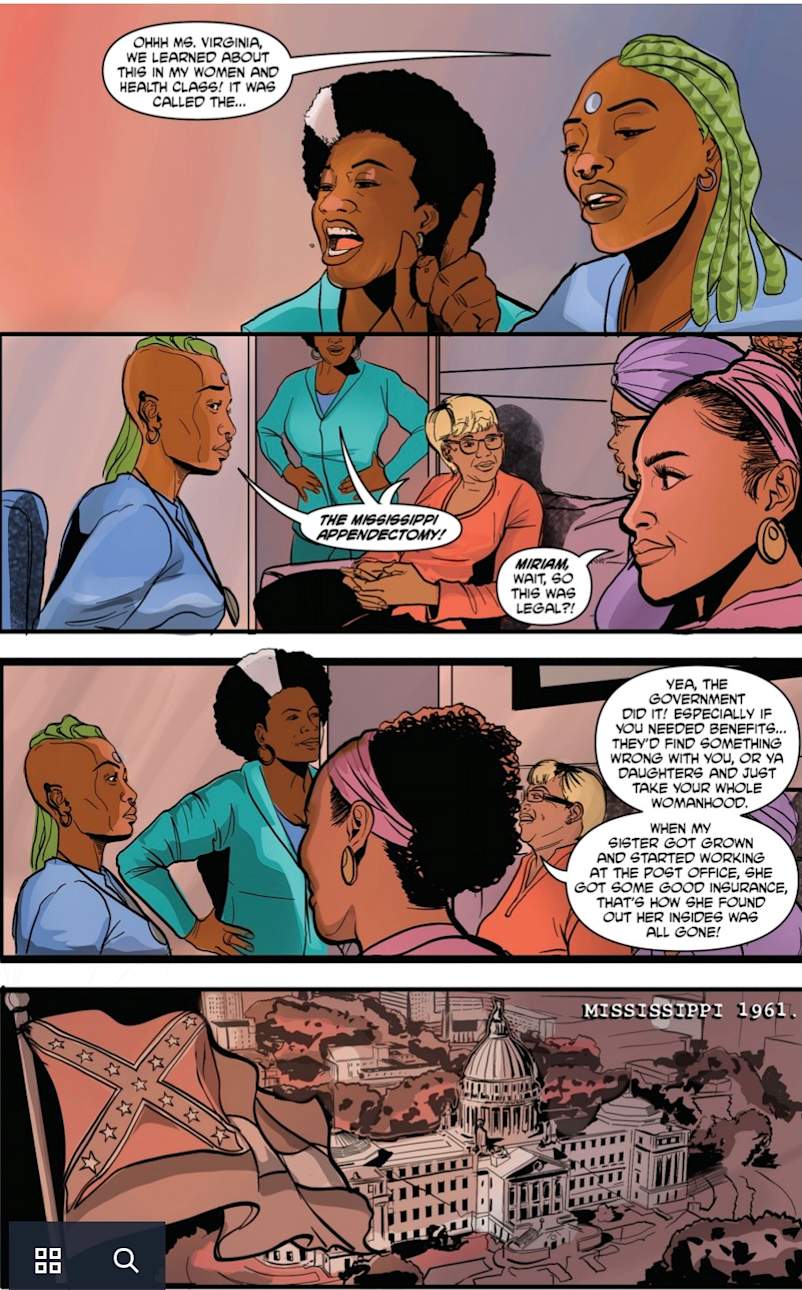
Hamer was very vocal about this. She and her husband were involved in the movement. She had a health condition that did require surgery. However, during that surgery, she was also sterilized—which, of course, she did not consent to. She only consented to the surgery for her health issue. They performed a hysterectomy on her without her consent, and she did not know this until after the surgery.
This was a normalized practice in the medical community throughout the South. If doctors had any reason or any capability of getting their hands on Black women’s bodies, they would determine, “Oh, well, this one is poor. They don’t need to have children. We’ll sterilize them.” “Well, this one may have children in the future. We’ll sterilize them.” “This one has a mental illness. We’ll sterilize them.” “This one already has X number of children. We’ll sterilize them.”
This process was so frequent that it literally had a medical slang term, the “Mississippi appendectomy.” That’s one of the excuses doctors would tell women—“Oh, well, you have an appendix problem.” And during the surgery they would sterilize them. Or, in order to qualify for welfare benefits, many times mothers would have to agree to have their teen daughters sterilized. This was a widespread practice throughout the South that was essentially medical terrorism on Black women’s bodies.
We chose Fannie Lou Hamer because, even after the voting, she spoke about what was done to her medically as another form of abuse of Black people in the South. We wanted to tell her story and also give more context to, when we think about, why doesn’t this group of people go get medical care? Well, there’s a long history of medical abuse in the Black community, and we wanted to highlight those challenges.
How Luna Has Been Received—and What’s Next
Wilder: How many of the comic books have been distributed? And what kind of response have you gotten?
Powell: We’ve actually distributed several hundred thousand comic books. Black Women’s Health Imperative has an initiative called On Our Own Terms. It’s a collaborative network of thought leadership that consists of six national steering committee members. These committee members include AIDS United, Positive Women’s Network, National Black Leadership Commission on Health (previously National Black Leadership Commission on AIDS), the New York Transgender Advocacy Group, WORLD, and [The Afiya Center].
These are our steering committee members. What we’ve done is we’ve given them so many comics to distribute within their network of consumers or community-based members that they serve. Through that, we’ve been able to have a large outreach.
We actually launched Luna in March in commemoration of National Women and Girls HIV/AIDS Awareness Day at Amalgam bookstore, a comic-book store in Philadelphia. Amalgam is one of the nation’s only African-American women-owned comic-book stores. We thought that would be a perfect match to launch Luna. We were able to distribute the comics there as well.
Now they’re available online for purchase and download through the BWHI On Our Own Terms website. We will have an additional issue of Luna out this week. [Editor’s note: This interview was conducted in late October 2020.] There will be three there to download, and two more in the process of being finalized.
Wilder: There is AfroComicCon, and in New York City, the Schomburg Center has a Black Comic Book Festival. There’s an online museum called the Museum of UnCut Funk that also has comics. Luna Unleashed really could take off if you get in the circuit of Black comic conferences and events.
Powell: Thank you. We’re excited about that. Right now, COVID has kind of put a damper on our plans to actually tour and present with this comic series, so we’re definitely looking forward to, when the outside opens up, being able to put this in front of a wider audience—to be in some of these places that are specific to comics, but also the nontraditional.
We’ve noticed that places like South by Southwest, they’re now offering a health track. We’re looking to taking Luna to conferences, such as those that are now offering health tracks.
Dortch: My husband and I normally attend Comic-Con in San Diego, and of course it was also affected by COVID this year. One of the things that’s happened with Comic-Con is they have been really great at developing tracks at the conference for nontraditional communities and communities that have been excluded from comics in the past. They have a Spanish-language track, and they have a track specifically for educators. Then, of course, they have a track on Black and Brown issues, and for women.
We’re really excited about in the future taking Luna to those tracks at Comic-Con, because they did a really great job last year with being so inclusive.
Wilder: Can you talk about what you found out when you did a small evaluation project of focus groups on the comic? Is [this] actually an effective way of communicating health information to Black women and girls?
Dortch: We did a focus group, and we gave participants two issues of Luna to read and then give feedback on. We did a focus group and a survey.
We wanted to know if Luna Unleashed was effective. And we did find that it was effective. We were able to find that it was helpful for our readers. They said that they learned things—and they learned not just about the issue of HIV prevention. Like we said earlier, they learned about healthier relationship dynamics.
We were able to educate them on more preventative methods. Many people were not aware of PEP [post-exposure prophylaxis] and PrEP [pre-exposure prophylaxis], some of the drugs and treatments that are available to help prevent HIV transmission. We also were able to see that it was helpful for them to learn some of the statistics and the data around the rates. Many people are not aware that African-American women have one of the fastest growing rates. So, getting that information out there really then served to get people responsive and to start thinking about what actions they could take, what they wanted to talk to other members of their community about, and talking to their partners.
We also found that it did increase the likelihood of people desiring testing. That information transfer was definitely there.
Wilder: So, what’s next for Luna?
Dortch: We have two more issues of Luna coming out. So there will be a total of five comics in the series. We’re going to see Luna graduate from nursing school. We’re going to see what kind of decisions she decides to make about her role in the community versus her own personal goals.
We’re also going to start to see more about Luna’s family, because she does come from a family of women who are healers and birth workers who do additional work in the community. So we’ll get to see what happens with her cousin. We’ll get to see her younger sister get more visible and vocal, which is going to be great as a role model for younger women and girls on how to get out the word about HIV prevention, safer sex, and health in general to even younger populations.
Wilder: Any additional topics that will be new?
Dortch: Yes. We have not yet discussed workplace discrimination, so we’ll talk about that. We’re going to talk about health equity and what it means for people to have access to all of their health care needs. We’ll also see the issues of food justice and environmental justice brought up. We’re also going to talk about abortion and pregnancy and alternatives and laws around women’s bodies. So we’ll also see politics jump into this.
Wilder: This was amazing. Anything in closing that you feel would be important to share about Luna Unleashed?
Dortch: Well, you asked a question about finding the illustrator, and Nakesha talked about the pairing with Legends First Publishing and their team. I think it’s really interesting that we’ve been able to have such a diverse team of people. We’ve been able to have men, women, younger people, and older people involved in this project. The interdisciplinary, intergenerational aspect of the work is really what we desire to do. We want this to be a work that goes out into the world and reaches a variety of audiences.
Powell: We have to continue to be innovative and creative in sharing health messages—that’s one of the biggest takeaways from Luna. We were very pleased that it was well received with the different topics, the language that we chose to use to make her relatable, and the diversification of the character.
It was very refreshing to get the feedback. I think our youngest participant was 14 or 15, and then we had participants that were older. So, to get that perspective across the lifespan, that this was timely, it was relatable and very informative.
Also, being able to share a little bit of history, as we often look at Black women being skeptical of participating in trials, particularly around HIV research. We’ve seen a lot of that research go to the continent of Africa versus being here in the U.S., and for obvious reasons. So, to get to share the history surrounding what that separatism is about and people being receptive to that, I think it bears witness to why it’s important to pivot when it comes to sharing health information.

