


The city of Bend is working with Oregon State University-Cascades to find out the best way to communicate public health messages about COVID-19 in advance of more vaccinations becoming available to the public.
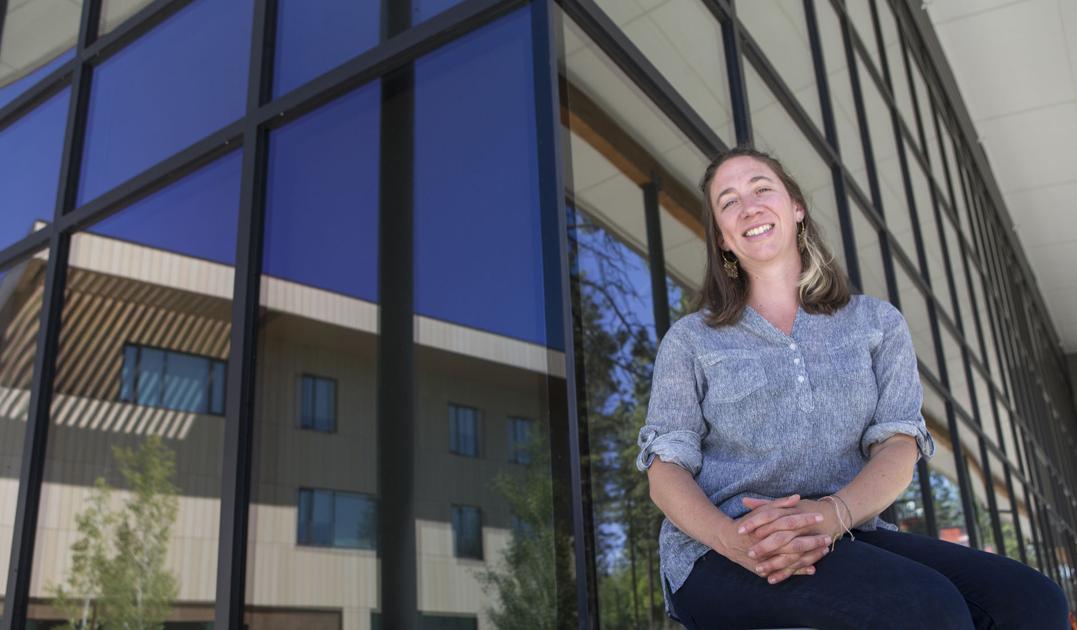
Over the past few months, Elizabeth Marino, a cultural anthropologist and co-director of the Laboratory for the American Conversation — a lab that studies civil discourse — worked with Christopher Wolsko, a psychology professor, to conduct a national survey as well as some focus groups in Bend to learn how people from different backgrounds and communities react to public health advice about COVID-19.
The city helped fund the research efforts with $8,000 of federal coronavirus relief funds, Anne Aurand, the city’s communications director, said in an email.
In the national survey, researchers found roughly 40% of people in the U.S. believe COVID-19 is no worse than the flu, and that about 25% believe it’s likely a hoax, according to a press release from the university.
The idea is to use information from the national survey to better understand what different demographics of people are saying when it comes to COVID-19, and see how the results translate to Central Oregon, she said. The plan is to then do more focus groups with different communities to better understand why there is mistrust.
“We are trying to understand where people are coming from and where that distrust is coming from,” Marino said.
This information can help tailor public messaging about COVID-19 and the vaccines that have been developed to fight against it in a way that aligns with the values of different groups of people and communities, Marino said.
For example, researchers asked residents ages 18 to 30 about their experiences with COVID-19, given data that show there is a high rate of transmission within this demographic.
Though not enough data has been collected to make any conclusive statements, one realization that came from the focus group was that many in this age group felt that they were taking precautions. The risk instead comes from living in shared living spaces, or working in public-facing jobs like retail, all of which makes isolating harder.
“You have to understand the social conditions that can’t change before you know how to message safety to people,” Marino said. “If you say, ‘Don’t see people outside of your family’ and it’s not an option, then (the message) becomes obsolete.”
Researchers also explored, in a series of interviews with people in Bend, why some don’t trust guidance from scientists or public institutions.
Interviews showed that in particularly Black and Indigenous communities, there is distrust in the medical establishment, which is often rooted in systemic mistreatment of those communities by medical professionals, according to the release.
Researchers hope to have more focus groups like the Latinx community, Marino said, as well as a chance to talk to political conservatives, libertarians and independents.
“Public discourses can highlight some people’s values and alienate other people’s values,” she said.
The goal is not to try to change anyone’s mind, but to create a healthy, public discussion about vaccines.
Whatever messaging arises, Marion said, it is important that it’s not excluding anyone.
“Our perspective is that people are always walking around the world trying to balance the risk they feel to themselves. We want to understand how people are experiencing those various risks they feel,” she said. “Taking people seriously and listening to their concerns is the starting point for establishing trust.”

