


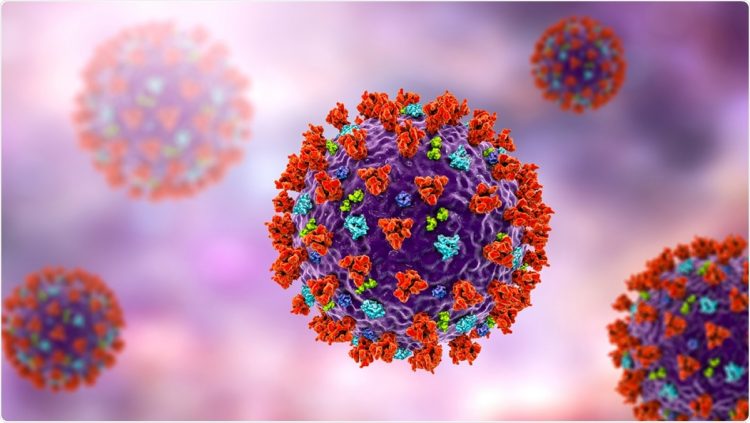
In a new study published in The Journal of Infectious Diseases, US researchers considered the emergence of a new SARS-CoV-2 spike protein variant. They compared spike G614-based assay to the original D614-based assay – pointing towards the development of recognizable, cross-responsive humoral immunity.
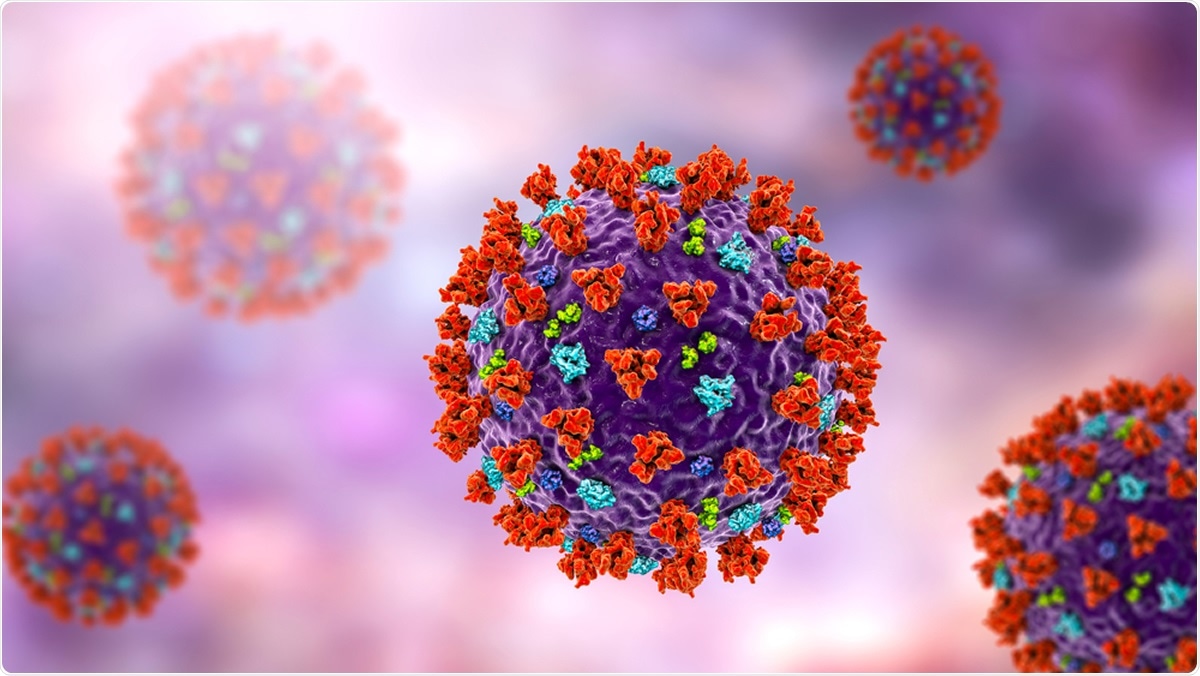
The need to understand the coronavirus disease (COVID-19) pandemic caused by the SARS-CoV-2 has turned our eye towards the acquisition and development of population immunity. We know that the human immune system responds to SARS-CoV-2 infection with a plethora of cellular and humoral effectors – including antibodies produced by B cells.
And indeed, antibodies developed against SARS-CoV-2 can recognize multiple SARS-CoV-2 proteins, which include nucleocapsid, envelope, and spike proteins. However, these antibodies may not provide adequate protection if viral mutations arise.
It was recently shown that the original spike protein genome sequence has been superseded by a modified amino acid at position 614, i.e., from D614 to G614. This emergent G614 strain is more infectious in nature; hence, there is genuine concern whether exposure to one variant of a virus will result in cross-reactive memory to the second.
In this recently published study, a group of US researchers led by Dr. Carleen Klumpp-Thomas from the National Center for Advancing Translational Sciences of the National Institutes of Health in Rockville (Maryland) generated a G614 full spike ectodomain construct and integrated this protein as an antigen in the enzyme-linked immunosorbent (ELISA) assay.
Methodological approach
In order to appraise the ability of antibodies mounted during SARS-CoV-2 infection to react against both variants of the spike protein (i.e., D614 and G614), the researchers have measured serologic reactivity by using ELISA for the detection of IgG, IgM, and IgA binding to full spike ectodomain trimers.
For that purpose, soluble spike trimers were generated with a protein sequence that was basically identical to the original spike variant, except for the addition of the aforementioned D614G mutation.
Moreover, DNA constructs were synthesized with genes optimized for expression in human cells and were additionally subcloned into a high-yield mammalian expression vector. Proteins were expressed in Expi293 cells (which are pervasively used for their expression) and purified.
A total of 88 samples from convalescent donors in a high-incidence community were tested, together with 100 pre-pandemic negative controls, and then compared to previously published data for the original D614 spike protein.
Binding to either spike variant not altered by a mutation
Serum samples from donors who tested positive for anti-spike antibodies when D614 spike was used also tested positive using G614 spike for IgG, IgM, and IgA antibodies. A positive correlation when all antibody sub-classes were appraised and all donors with a positive reaction to D614 antibodies also exhibited strong reactivity to the G614 spike.
By pursuing a linear regression and correlation analysis, the researchers have found a strong correlation and good fit between both variants. There was a 1:1 signal intensity ratio according to the slope of the regression line.
When test performance was concerned, both proteins were shown to purify similarly, without the difference in protein behavior in analytical size exclusion chromatography. The latter means that both proteins analogously formed the expected trimeric structures.
Polyclonal antibody response
These data clearly imply that the use of the full spike protein construct should not affect seroassay performance or “miss” samples that are seropositive. Moreover, it can be concluded that human antibody response to SARS-CoV-2 can be recognized using D614 or G614 spike protein in enzyme-linked immunosorbent assays.
“The fact that D614 and G614 both elicited seropositivity is perhaps expected, given that the human immune response is polyclonal”, say study authors.
“While there may be antibodies produced that recognize spike protein epitopes specific for D614 or G614, these would be among the many antibodies recognizing the SARS-CoV-2 spike protein used in our seroassay”, they add.
In any case, additional in-depth research endeavors on this topic should appraise individual B cell clones and immune responses in correlation with viral genome sequencing. This may result in profound breakthroughs in our understanding of disease biology and treatment development.
