


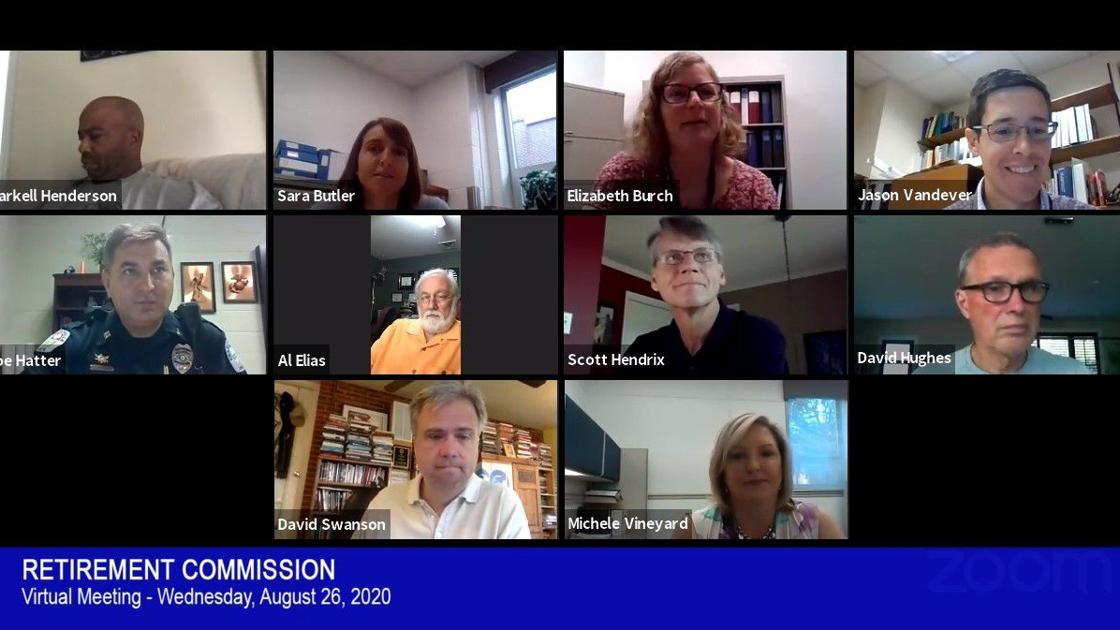
“Primarily, it needs to be a financial investment motivation,” Vandever said of changes to the portfolio. “If we’re able to do that and meet some of our social goals, we can do that. We have to prove that these steps will meet and exceed what our expected rate of return would be without taking them.”
The city’s retirement fund totals about $177 million across 16 accounts with 11 managers.
At its November meeting, the commission approved divestment for its large cap investments. Large caps refer to the biggest companies on the market and cover 32%, or $58 million, of the city’s total retirement fund.
The commission was able to make the move when portfolio managers compared the return on investment of the current investments with a fossil fuel-free index.
The fossil fuel-free index includes all but 15 of the same companies. The excluded companies include Exxon Mobil Corp., Chevron Corp. and ConocoPhillips. Managers then redistribute more money to the remaining companies.
Because of the nature of retirement investments, it’s unclear exactly how much money went to the 15 fossil fuel companies.
Over the past five years for one account, the retirement fund has a 12.46% return on investment in its current state. If the city had used the fossil fuel-free index, it would have a 14.84% return. For 2020 through the end of September, the current investment had a 0.89% return, compared with a 7.16% return that would have occurred on the fossil fuel-free index.

