


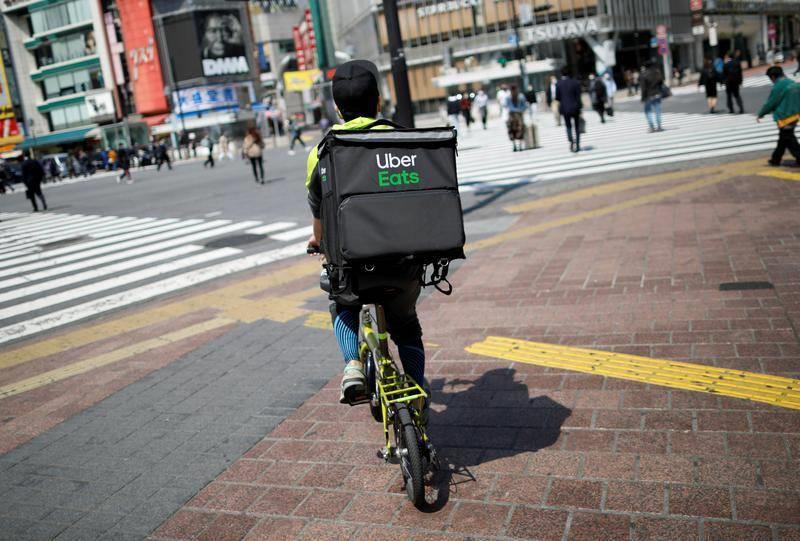
(MENAFN – Khaleej Times) Uber’s food delivery business brought in more money during the third quarter than its signature rides business, showing just how much consumer behaviour has changed — and how far the company has adapted — since the pandemic struck.
The San Francisco-based ride-hailing company lost $1.09 billion in the three months that ended September 30 as many customers were still staying out of shared vehicles.
‘Without question, the [pandemic’s] impact on the world has been one of the most significant impacts of our lifetimes, and we moved quickly as a company to respond, said Dara Khosrowshahi, CEO of Uber, in a conference call with investors Thursday.
Uber brought in $3.13 billion in revenue, down 18 per cent from the same time last year. Its mobility business, which includes ride-hailing, scooters and bikes, accounted for $1.37 billion of that, down 53 per cent from the same time last year. Despite the decline, the rides business showed improvement from the second quarter, when it brought in just $790 million.
The partial recovery in rides was linked to the level of lockdown restrictions in any given city. ‘When cities start to move, so too does Uber, Khosrowshahi said.
In New York City, where the Covid case count has been more controlled than elsewhere in recent months, bookings recovered to 63 per cent of year-ago levels in October, he said, adding that Uber ridership there is recovering faster than mass transit or taxis.
The riders that were first to return to Uber’s cars tend to be more price-sensitive, and are more likely to be heading to jobs that don’t offer the option to work from home, Khosrowshahi said.
Uber’s Eats business generated $1.45 billion in revenue, up 125 per cent from a year ago as restaurants relied on Uber for delivery and the trend of people ordering in instead of dining out during the pandemic continued.
Uber’s food delivery business also brought in more revenue than its rides business in the second quarter, when demand for rides was even lower due to the pandemic. However, its rides business was more profitable than delivery.
Uber Eats continued to add restaurants to its app, and its partnerships with restaurants grew by more than 70 per cent compared with last year. It also added a contactless payment feature to allow customers who are dining in restaurants to order or pay using their Uber Eats app.
Uber also expanded its grocery delivery service, which is now operating in 10 countries outside the US It also launched a prescription drug delivery pilot programme in Dallas and Seattle.
Uber has also girded itself against the pandemic’s impact by cutting $1 billion in fixed costs, Khosrowshahi said.
Uber’s quarterly performance was better than feared given the brutal Covid backdrop for ridesharing, said Dan Ives, managing director of equity research at Wedbush Securities.
‘The path to profitability for 2021 is still in the cards for Uber… This quarter was a step in the right direction, he said.
The quarterly figures were released after Uber scored a major victory Tuesday in California. Voters there passed Proposition 22, granting Uber, Lyft, Doordash and others an exception to a law that sought to classify their drivers as employees, an expense that analysts thought would have pummelled Uber’s business in the nation’s most populous state.
Shares in Uber Technologies fell around two per cent in after-hours trading on Thursday, but it retained a 16 per cent boost since Proposition 22 passed.
MENAFN07112020000049011007ID1101088343
Legal Disclaimer: MENAFN provides the information “as is” without warranty of any kind. We do not accept any responsibility or liability for the accuracy, content, images, videos, licenses, completeness, legality, or reliability of the information contained in this article. If you have any complaints or copyright issues related to this article, kindly contact the provider above.

