


Stop me if you’d heard this one before, but if the COVID-19 pandemic and resulting panic has any defining quality, it’s creating an unparalleled era of uncertainty for retailers.
In these times, it can be easy for retailers to pack it in; for those that can afford to close for extended periods of time, the pandemic has offered an opportunity to remodel or otherwise reevaluate their businesses. Others are sadly opting to close their doors for good. For many retailers, however, this crisis has forced a need for agility and velocity of adaptation.
At a time when getting vital insights into customers’ wants and needs is fractured by distance, what is a retailer to do? For many, the answer may lie in deploying smart video technology to connect with customers face-to-face, even if it’s just remote.
The Need for Agility
Retailers both online and brick-and-mortar have relied on quantitative analytics for decades to reveal key insights about consumer habits. These analytics can provide an ocean of information on everything from how many customers are visiting a store, to conversion rates on particular promotions, to robust demographic information that can help retailers best target customers.
In short, this quantitative data can give retailers the what. The problem is, to be truly adaptable to the needs of customers, retailers need to know the why.
To answer that all-important question, retailers have long relied on face-to-face interactions with their shoppers, oftentimes through focus groups or in-person, in-store intercepts. While quantitative analytics can reveal how many customers are interacting with a store display, this qualitative data can give a retailer the insights they need to maximize the efficacy of that display to create the most sales opportunities possible.
Focus groups are an expensive proposition to set up, execute and analyze. They require recruiting, travel, moderation, transcription, translation, and insight analysis; yet the answers they give are gold for retailers.
During the COVID-19 pandemic, retailers can’t rely on these in-person interactions to glean these insights for safety reasons. Yet the need for gauging customer sentiment is more important than ever, as they can affect reopening efforts and inform decisions retailers make to maximize sales at a particularly precarious time.
This is where video-based insight conversations can be the game-changer.
Leveraging the Tools at Your Disposal
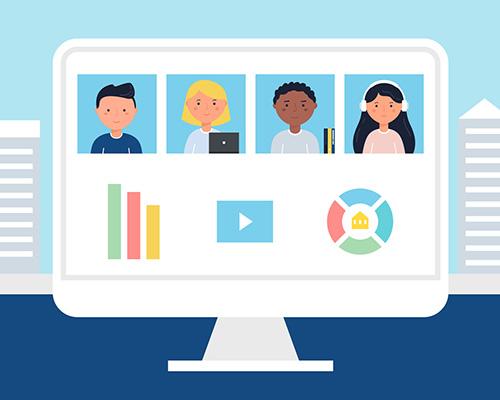
Purpose-built video conferencing platforms provide ways for retailers to facilitate face-to-face interactions with customers to gain necessary insights to adjust to uncertain times, all while maintaining a safe distance. In some cases, virtual discussions can offer advantages to in-person focus groups, like taking the bias out of concept evaluation and recording all customer feedback in one virtual environment.
What’s more, these online discussion platforms can be deployed and acted upon with the velocity necessary to respond to the moment, all at a lower price point than focus groups of the past.
Over the past four months, video chat platforms have exploded in popularity, allowing friends, family and coworkers to virtually come together when in-person interactions are impossible. A smart video discussion platform, by contrast, offers a business-specific twist on traditional video chat, giving retailers the tools they would have at their disposal in a traditional focus group, automated to reduce cost and turnaround times.
These platforms can offer retailers interactive discussion guides to lead focus group conversations, transcription services and analytics tools for after-the-fact insight gathering. What previously took teams weeks can now be done in minutes, providing retailers with near real-time, actionable qualitative data.
Online video conversations can also be scalable to encompass more customer viewpoints since they’re not limited by travel or time zones like in-person focus groups.

