


Truck-to-rail intermodal facilities aimed at aiding Oregon farm exports from the Willamette and Treasure valleys have fallen behind schedule for providing key information to transportation authorities.
Delays in turning over detailed financial statements and operations contracts mean that sponsors of the projects in Millersburg and Nyssa aren’t yet eligible to access more than $42 million for construction.
However, proponents of the projects expect the documentation will be submitted to the Oregon Transportation Commission, which oversees the funding, by the end of the year.
“We feel really good about our business model and the parties at the table,” said Roger Nyquist, chairman of the Linn County Commission, which supports the Millersburg project.
Submitting the required information is more than a matter of shuffling paperwork. The transportation commission was dubious enough about the economic prospects of both facilities that it withheld most of the grant money until their feasibility could be fully documented.
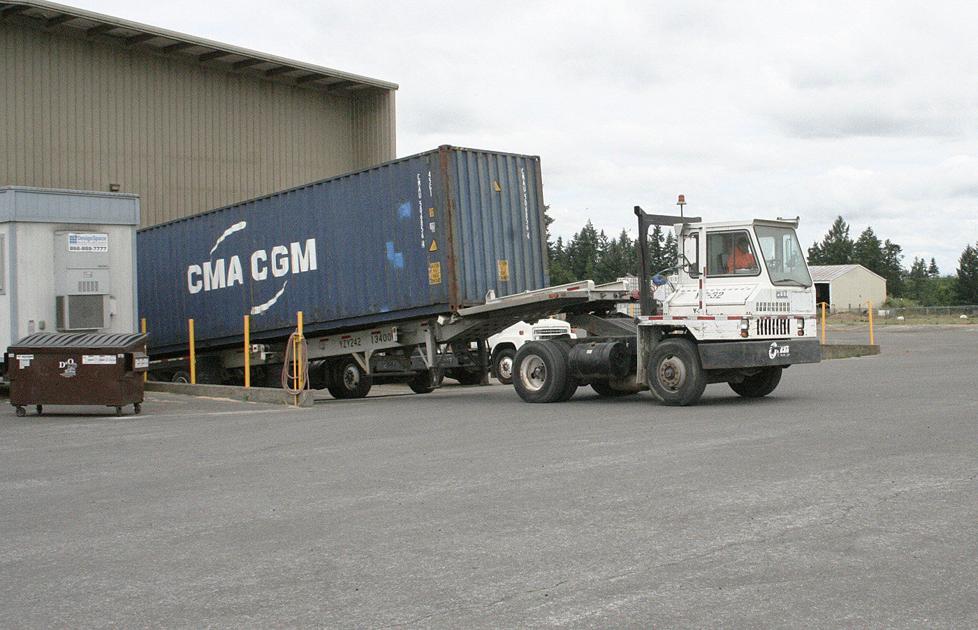
The Millersburg facility is intended to allow farm exports to bypass Portland traffic by instead having containers of straw, seed and other goods switched from trucks to trains in the Willamette Valley. They would then go to ports in Washington.
The Nyssa project would allow producers of onions and other crops in the Treasure Valley to ship containers directly to markets by train, rather than first trucking them to an intermodal facility in Washington.
Though lawmakers authorized $51 million for the projects, an independent economic analysis commissioned by the state Department of Transportation raised questions about whether the facilities would be able to earn enough money to pay for their operations.
The transportation commission has disbursed some of the $25 million available for the Willamette Valley project and the $26 million available for the Treasure Valley project while sponsors have focused on the planning and design phases.
However, proponents can’t access most of the cash until they have executed contracts with the companies that will operate the facilities and the railroads that will service them, as well as financial projections showing they can be self-sustaining, among other requirements.
Neither project has met several of the key milestones set out by ODOT officials earlier this year, but sponsors of both facilities are confident they’re close to completing the documentation.
“They’re actually making good progress in most things,” said Erik Havig, ODOT’s planning section manager, noting that sponsors have fulfilled some requirements while still needing time on the operator contracts and financial statements.
Though the sponsors cannot get construction dollars without that documentation, “there is no hard deadline for when the facility has to be constructed,” Havig said.
It’s been tough for the Millersburg proponents to get detailed projections of the prices agricultural shippers will be expected to pay for the intermodal service in 18 months, due to the coronavirus and the economic uncertainty, said Nyquist, the county commissioner.
Even so, the project’s position has been strengthened because it’s found a way to access empty containers returning to China after unloading goods in the U.S., Nyquist said. The lack of sufficient empty containers for farm exports was a major criticism in ODOT’s economic analysis.
“We’re eager to get going,” Nyquist said.
Likewise, the Treasure Valley facility is close to completing contracts with the railroad and an operator, as well as engineering and design requirements, said Greg Smith, the project manager.
“All those pieces are coming together, they just take time,” he said.
A group of 14 onion shippers has completed a survey of their projected shipments, and the potential facility operator believes there are opportunities for new destinations in the Southeast U.S., Smith said.
“These are markets that were previously not cost-competitive,” he said.

