


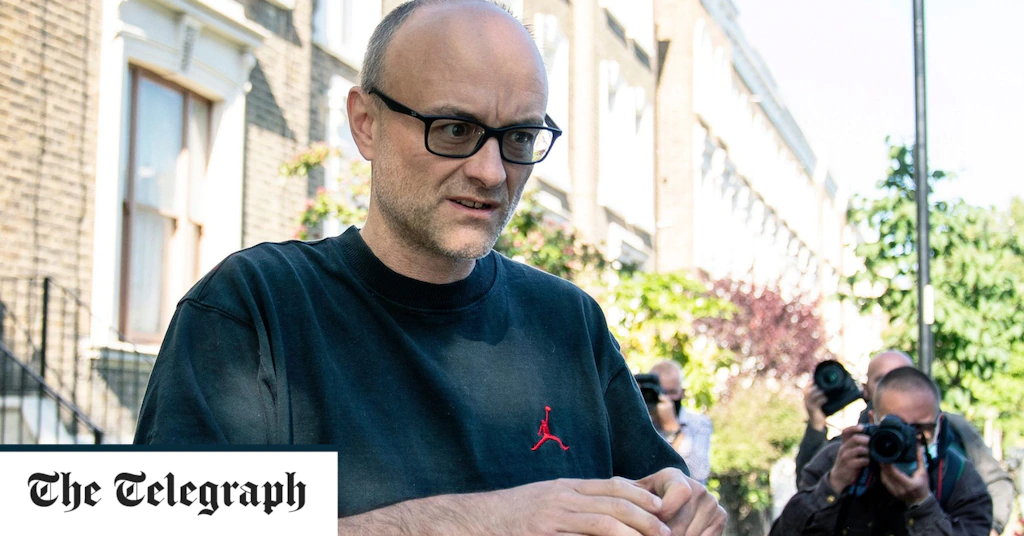
Police said on Thursday that Mr Cummings “might” have contravened public health regulations during his 14-day stay in Durham but that it warranted no further action.
Writing in this newspaper, Mr Frayne said the Cummings saga was “beyond an irrelevance” to the majority of the public, who were far more concerned with job security, schools reopening and being reunited with family and friends.
He said that while opinion polls show public disapproval for what Mr Cummings did, they involve people being asked for their view on a specific subject, rather than asking them what subjects matter to them.
He said: “Over the last three months, Cummings’ name has never once cropped up unprompted in a focus group I have moderated.”
Mr Frayne, who was director of communications at the Department for Education while Mr Cummings was a special adviser to then Education Secretary Michael Gove, argues that the matter “will not and cannot have caused lasting damage in the eyes of the public”.
Voters are more likely to lose trust in the Government because of its slow response in helping the self-employed or, even worse, a second peak of the coronavirus or a spike in unemployment.
Meanwhile an ORB poll published today shows that 29 per cent of the public would have driven 260 miles to their parents’ home during lockdown if they felt the welfare of their children was at risk.
However more than half – 56 per cent – said they would have stayed at home.
The same poll shows that Labour leader Sir Keir Starmer is regarded as showing more leadership than Boris Johnson during the crisis.
Almost half of those polled – 45 per cent – thought Labour leader Sir Keir Starmer was “showing leadership” during the crisis, with just 28 per cent saying the opposite.
Almost as many people thought Mr Johnson was doing a good job, 42 per cent, but 51 per cent thought he was failing to show leadership. Far fewer respondents had no opinion on Mr Johnson than did on Sir Keir.
The majority of people do not think the spread of the virus is under control, with 54 per cent saying it is not, compared with 33 per who think it is.
The poll also shows what scientists will regard as worrying levels of resistance to taking a coronavirus vaccine if one is developed, following the rise of the so-called “anti-vax” movement.
For the nation to develop so-called herd immunity to a virus, between 80 and 90 per cent of people typically need to be vaccinated, though the number can be higher or lower than that for some illnesses.
However, 14 per cent of people say they would not be willing to take a coronavirus vaccine if it was developed in record time, with 11 per cent saying it would not be safe and seven per cent regarding it as unimportant.

