


Study Objective
To present updated information regarding compensation patterns for FMIGS graduated
physicians in the United States beginning practice during the last ten years, focusing
on variables impacting differences in salary including gender, fellowship duration,
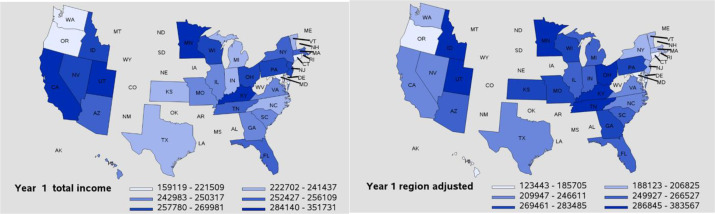
geographic region, practice setting and practice mix.
Design
An online survey was sent to FMIGS graduates between March 2019 to April 2019. Information
on physicians’ demographics, compensation (based on location, practice model, productivity
benchmarks, academic rank and years in practice), and attitudes toward fairness in
compensation was collected.
Setting: Online Survey
Patients or Participants
FMIGS graduates practicing within the United States.
Interventions
E-mail Survey
Measurements and Main Results
We surveyed 298 US FMIGS surgeons graduating during the last 10 years (2009-2018).
Response rate was 48.7%. Most respondents identified as female (69%). The majority,
(84.8%), completed 2 or 3-year fellowship programs. After adjustment for inflation,
the median starting salary for first post-fellowship job was $252,074 [223986, 279983]
(Table 1-1). Median time at first job was 2.6 years and median total salary at current
year rose to $278,379.4 [241437, 350976]. Median salary for respondents entering a
second post-fellowship job started at $280,945 [261409, 329603]. Significantly lower
compensation was reported for female FMIGS at initial post-fellowship jobs and was
consistently lower than males over time. Most FMIGS graduates (59.7%) reported feeling
inadequately compensated for their level of specialization.
Conclusion
A trend toward higher self-reported salaries is noted for FMIGS fellowship graduates
in recent years with significant differences in compensation between males and females.
Among OB/GYN subspecialists, FMIGS graduates earn significantly less than other fellowship
trained physicians with median salaries that are lower than those of generalist OB/GYN
physicians.

