


1. Methodology
1.1 Theme
Self-reliance is defined as the ability of an individual, household or community to meet essential needs and to enjoy social and economic rights in a sustainable manner and with dignity. This participatory assessment focused on livelihoods and self-reliance of urban refugees and asylum-seekers in Mauritania. The assessment covered a range of issues, including access to vocational training, tertiary education, formal and informal employment.
1.2 Objectives
The objectives of this participatory assessment were to identify protection risks among refugee communities; identify the causes of these risks, but also the capacities and resources within the communities and the corresponding public services available locally. This exercise was an opportunity to discuss with both refugee communities and service providers about the challenges, priorities and the local solutions available to them, in line with the Global Compact on Refugees (GCR) which articulates the importance of refugees’ access to jobs and livelihoods to enable them to meet their needs and contribute to the local economy while preparing for their future whether they return home, integrate in the country of asylum, or resettle in a third country.
This qualitative exercise falls within UNHCR Mauritania’s plan to gather more data on the socio-economic situation of PoCs, in view of developing evidence and market-based interventions to facilitate the economic inclusion of urban persons of concern (PoCs). A socio-economic assessment has been planned for the second quarter of 2019, to gather quantitative and qualitative data on assets, income level, education, work experience and capacities, as well as on the interest and motivation of refugees to find employment or create self-employment opportunities, including factors that hinder participation in certain areas of work. A market study is to be conducted in the last quarter of 2019.
1.3 Methods and target groups
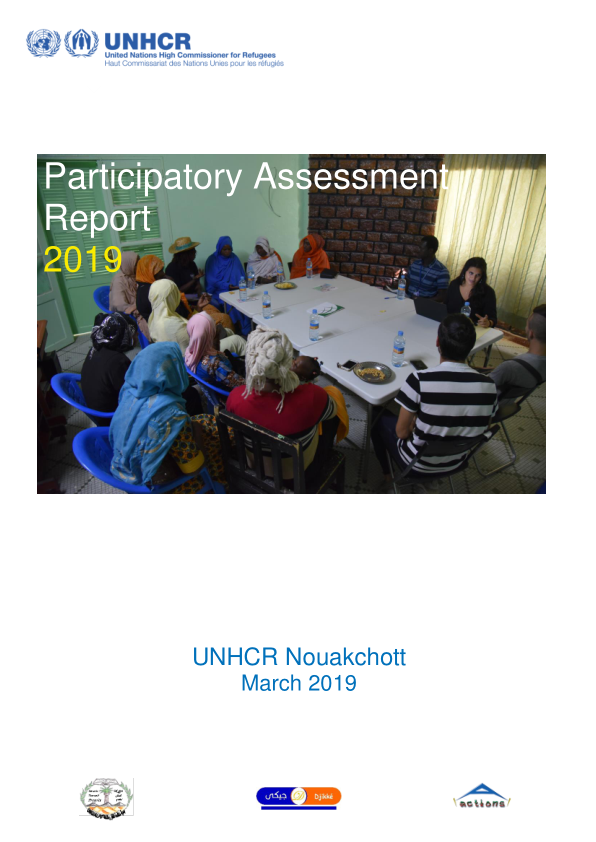
Multi-functional teams composed of UNHCR and partners (ALPD, ONG Actions, Djikke) participated in the design and implementation of the participatory assessment. Four complementary methods were used during the exercise conducted during the first two weeks of March 2019:
-
A desk review using data from UNHCR database proGres to conduct a review of working-age PoCs and their profiles in terms of education and occupation, using age, gender, diversity, location, and nationality variables. All urban PoCs aged from 18 to 55 registered as of 1 March 2019 were targeted for this review.
-
20 focus group discussions with a total of 210 refugees and asylum-seekers were organized in Nouadhibou and Nouakchott (Sebkha and Tevragh Zeina neighborhoods). These groups were composed of: Male youth (4 groups); Female youth (2 groups); Adult men (6 groups); Adult women (4 groups), with youth aged between 17 to 24 years old, and adults from 25 to 55 years old. Additional groups discussions were conducted with refugee leaders (1 group), LGBTI refugees (1 group), and graduates from DAFI and ILO learning programmes (1 group), and a mixed group in Nouadhibou.
-
12 interviews with key informants from various Units and Directorates of the Ministry of Vocational training, Labour, Employment and Modernization of the Administration (MFPTEMA), the national agency for youth employment and job placement (ANAPEJ), the national agency for vocational and technical training (INAPFT), the Guichet Unique (national agency in charge of supporting the creation of enterprises), the national social security agency (CNSS), and the Chamber of commerce.
-
18 workplace visits where PoCs are employed, when agreed by them, to see their working conditions and discuss conditions of employment with their employers. In addition, 3 interviews were conducted at the partner office (ALPD) for PoCs who refused to be visited at their workplace.

