


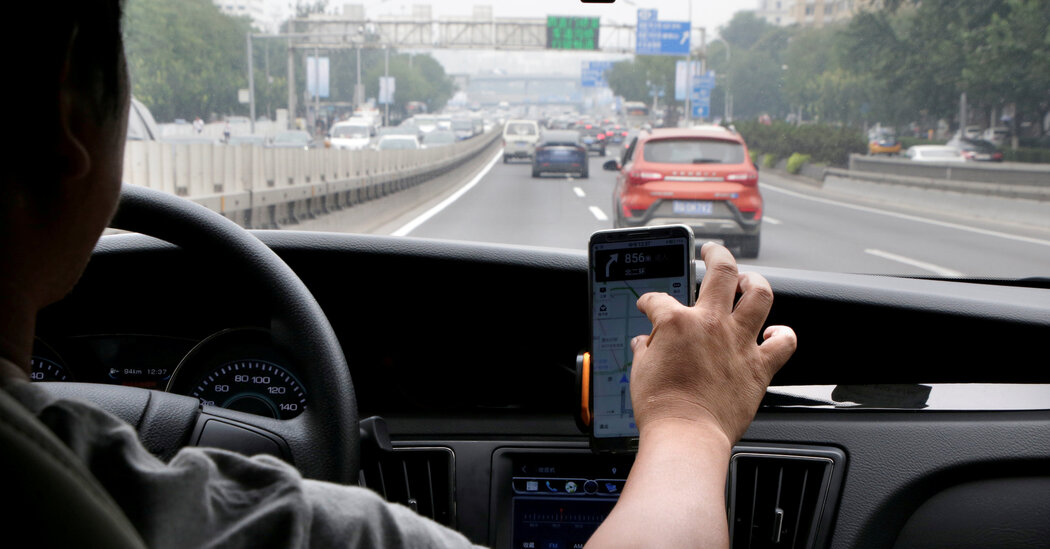

China’s leading ride-haling platform, Didi, debuted on Wall Street on Wednesday, ending a year in which ride-haling and travel agencies struggled to overcome an intermittent pandemic blockade. ..
Diddy opened on the New York Stock Exchange for $ 16.82 per share, up 20 percent from the asking price of $ 14 per share. However, investor interest chilled all day, and Diddy closed at $ 14.20, fixing the company’s value to over $ 69 billion.
Wall Street continues to embrace fast-growing tech companies, regardless of their ability to make a profit, so the company made its debut by trading under the ticker DIDI. In particular, ride-hailing service companies like Uber and Lyft have proven to run out of billions of dollars in cash each year and lose money.
Diddy is no exception. It lost $ 1.6 billion last year and reported a profit of $ 30 million in the first quarter of this year. The company said in a regulatory filing that last year’s sales fell 8% to $ 21.63 billion due to a pandemic.
Despite its dominance in China and other countries, Diddy may face extraordinary oversight from investors as tensions continue between the United States and China. The US government has listed some Chinese tech companies on a list that limits their ability to do business with the United States or its trading partners.
Daniel Ives, Managing Director of Equity Research at Wedbush Securities, said: “This is a successful IPO,” he said, but there is still much to prove to investors worried about tensions between countries.
Investors may also be wary of regulators in Diddy’s home country. China’s antitrust authorities are beginning to actively scrutinize major Chinese internet companies. Last year, Chinese regulators began cracking down on what is called unfair and anti-competitive business practices in the Internet industry.
David Trainer, CEO of investment research firm New Construct, said:
The taxi industry group created the country’s antitrust watchdog in December, requesting that Diddy reconsider its acquisition of Uber’s business in China in 2016. I was already investigating the sale for antitrust reasons without taking any action. The letter accused Diddy of using unfair subsidies to retain passengers and ordering unlicensed drivers and vehicles to board.
In April, Diddy was one of about 30 Chinese internet companies pulled before regulators to ensure compliance with antitrust rules and to “put national interests first.”
Diddy immediately issued a statement published on its website by antitrust regulators, “promoting the development and prosperity of socialist culture and science,” and vowed to strictly comply with the law. Regulatory pressure has raised questions about whether Diddy is allowed to grow large enough to consistently make a profit, Trainer said.
Both Didi and Uber are focusing on Latin America for global expansion. However, the number of cases of coronavirus continues to increase in the region, which can affect growth plans.
“How do they behave in places like Africa, the Middle East and South America? Do you call Didi or Uber?” Marcum BP, an Asia-focused audit and advisory firm Drew Bernstein, co-chair of the company, said.
Didi was founded in Beijing in 2012 and merged with its Chinese rival Didi in 2015 to form Didi. In China, the rise in Didi reflects the rise in other tech powers such as ByteDance, TikTok’s parents, and food delivery giant Meituan.
Uber tried to compete in the Chinese market, but eventually sold its Chinese business to Didi in exchange for its shares. Now that Diddy is public, Uber’s stock is worth about $ 8 billion.
Two separate cases in which Diddy’s driver raped and killed a female passenger in 2018 prompted the company to change services, but did not significantly reduce its appeal to users. Still, Didi continues to be a leader in China, despite the fact that companies of all sizes are entering the ride-hailing reservation business.
Diddy is dominant in China and has operations in 16 other countries, including Australia, Brazil, Mexico and Russia, but its valuation is significantly less than Uber’s $ 94 billion. However, unlike Uber at the time of its trading debut two years ago, Didi remained above the IPO price during the first day of trading. Didi has dwarfed Lyft, the second largest ride-hailing service company in the United States, with a value of nearly $ 20 billion.
Diddy said he has the ability to grow further as he expands his business into new international markets. “We aim to be a truly global technology company,” Didi founders Cheng Wei and Jean Liu wrote in a letter included in their regulatory filings.
Diddy was valued at $ 56 billion in 2017 and its investors include Softbank in Japan. Abu Dhabi State Fund, Mubadala. Alibaba and Tencent, two major internet Goliaths in China. And Apple invested $ 1 billion in 2016 to show its support for the Chinese market.
Many Chinese companies have sold their shares on US exchanges in recent months, including companies in industries such as electric cars that have been abused by trade conflicts between Washington and Beijing. Chinese electric car maker Nio has raised $ 2.6 billion in a December offer on the New York Stock Exchange.
Prior to resigning this year, President Donald J. Trump banned Americans from investing in companies identified as having a connection with the Chinese military. However, his administration did not make efforts to limit access to the US capital markets by a wider range of Chinese companies.
Chinese Ride Hailing Giant Didi Debuts on Wall Street
Source link Chinese Ride Hailing Giant Didi Debuts on Wall Street

