


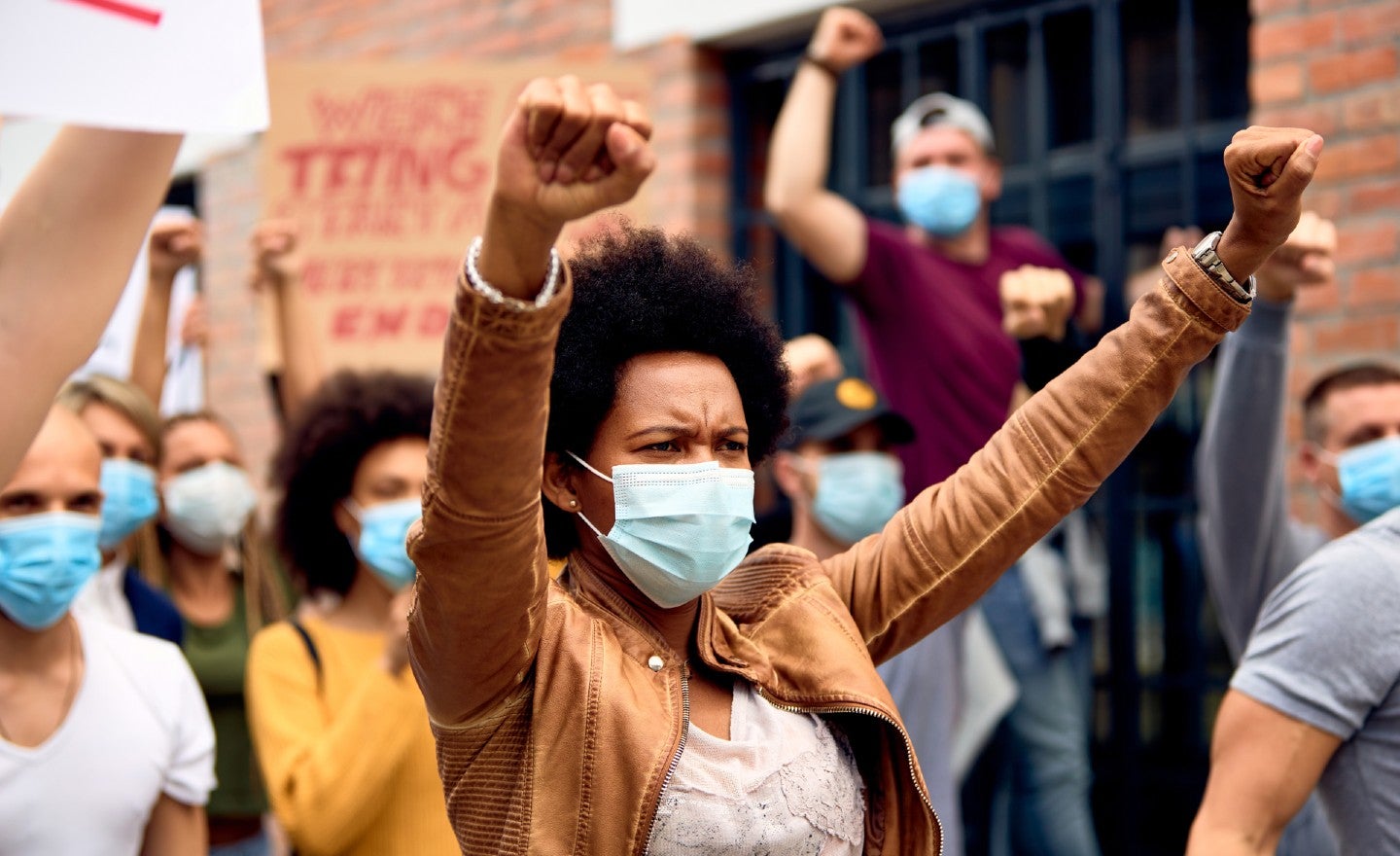
Across the country, advocates working to advance health and racial equity are feeling hopeful about new leadership in Washington, D.C. With nationally elected officials who are sincerely interested in system-wide reforms to improve health, secure racial justice, and rebuild our economy, change seems possible.
But before we all buy our bus tickets to Washington (or, more likely, set up a virtual visit with our member of Congress), we need to reflect on where real change has come from in America in recent years: grassroots movements in the states.
After all, for anyone celebrating this national moment of possibility, remember: it was brought to you by grassroots organizers in Georgia who mobilized voters to elect two progressive candidates and swing the Senate to Democratic control. The win showcased just how crucial low-income and communities of color are to moving the needle toward justice, equity and inclusion.
As for the policy side, for those interested in extending health care to more people: Community organizing did that in Maine. Think wages are lagging? Look to Washington, New York and California. Eager to make life more tolerable for immigrants? That happened in Utah. Those states led the way for others to follow.
For national advocacy groups, the standard playbook has too often been: recruit those affected in towns, cities and states when it’s time to sign on to their letter or be the constituent voice to members of Congress. Communities serve their purpose in advancing a broader agenda — there’s a policy win or loss, some follow up on implementation or next steps — and the engagement ends.
But that transactional approach can put the policy win at risk. For example, despite the Obama administration expanding access to Medicaid, 21 states chose not to participate. And it wasn’t until 2017, when Maine voters, persuaded by a coalition of local organizers in Portland, expanded access by referendum and set the stage for states like Kentucky, Idaho, and Nebraska to follow suit.
That wasn’t just community engagement — it was exercising community power. In our recent research in 16 communities across the country, our team documented the ways in which the fight to raise the minimum wage bubbled up from states like Washington, New York and California — with Florida (yes, that Florida) being the most recent state where voters approved an eventual increase to $15 an hour.
The popularity of minimum wage hikes is due in part to a state-level demonstration effect. After the 2016 passage of a Washington measure to drive the minimum wage to $13.50 per hour over four years, national groups were able to study the change and make the case that the sky didn’t fall, and businesses didn’t tank.
But it was also due to the effects of demonstrations at the state level — that is, a “Fight for 15” that mobilized community- and labor-based groups to challenge corporate actors and governments alike to commit to the idea that no full-time worker should live in poverty. And convert that mobilization to on-going vigilance and oversight.
Across these wins, building community power is key. But it’s also not just instrumental to winning — a better means to a policy end — it’s a fundamental win. It is not just a tool to achieve outcomes but an important outcome in and of itself. It’s about deepening the bench of leaders and innovators who can drive change and who can move from issue to issue — from health care to immigration, housing, and climate — as needs and opportunities shift.
This transformation into leaders and innovators often starts by helping people turn what they feel is a shameful and solitary experience — like not being able to secure health coverage for their family or worried about their uncertain immigrant status — into a platform for change to help others. There is power that cannot be taken away when private shame turns into a public stance.
None of this is to disparage national advocacy groups. But it’s clear that the shortfalls of an earlier era of hope and change was that people rushed to D.C. to advocate rather than going back to local communities to do the community power-building that could have provided wind to a president’s sails when he was right and held him accountable when he was wrong.
Let’s not make that mistake again. For national groups dedicated to advancing health and racial equity, it’s time to recognize that there are countless grassroots community organizers already doing this work. And it’s in that complex interplay between community power-building and a national agenda for justice that we can realize the possibility of this moment: the chance to advance, achieve and sustain an agenda for health and racial equity.
Manuel Pastor is Distinguished Professor of Sociology and director of the Equity Research Institute (ERI) at the University of Southern California (USC). Jennifer Ito is a former community-based researcher and the research director of ERI.

