


Sydney Kurle | Dec 8, 2020
The California Pan-Ethnic Health Network (CPEHN) released a report on Monday detailing strategies policymakers can adopt to promote equity in health care delivery systems.
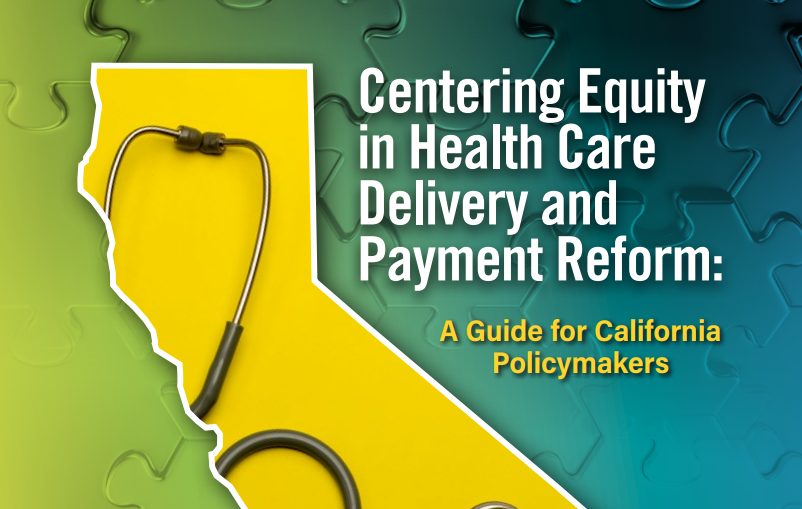
The report, Centering Equity in Health Care Delivery and Payment Reform: A Guide for California Policymakers, is the result of a two year project funded by the California Health Care Foundation. CPEHN partnered with six community organizations to form diverse focus groups which worked to engage consumers on where they thought California health care could improve.

“Although California has a national reputation for advancing progressive health care policies, California’s communities of color, including lesbian, gay, bisexual, transgender and queer (LGBTQ+) individuals and persons with disabilities, continue to experience discrimination and have poorer outcomes than other Californians on key health indicators,” said CPEHN’s executive director Kiran Savage-Sangwan in a statement.
This discrimination has made marginalized communities less likely to establish primary care as a preventative measure due to a history of racism, experimentation, exploitation, and exclusion, reads the report. To make California healthier as a whole, CPEHN recommends the following strategies:
- Center Equity in Quality and Payment
- Engage Patients, Families, and Caregivers
- Strengthen Culturally and Linguistically Appropriate Care
- Improve and Integrate Physical, Behavioral, and Oral Health Care
- Hold Health Plans and Systems Accountable
- Improve Social Determinants of Health
The report breaks these strategies down into short-term and long-term recommendations on how to achieve those goals. But the major theme throughout is making health care accessible.
To make care more accessible to patients on public health plans, CPEHN recommends incorporating risk adjustments so that Medi-Cal providers are not penalized for taking on sicker, more complex patients that would otherwise not be covered by private insurance.
Another hurdle for marginalized patients is receiving care that is understandable. With a state as diverse as California, that requires improving interpreter and language services and improving the readability of support tools and resources.
“The interpreter service at the hospital is horrible… every time my grandmother goes to the hospital, I go to interpret. It makes [going to] the hospital a greater hassle,” said a focus group participant in Orange County.
CPEHN also recommends strengthening and enforcing state and federal discrimination laws and making it easier for patients to raise their concerns.
The report also notes that providers themselves often don’t reflect the communities they serve.
“Unfortunately, despite individual actions and intentions, our health care system as designed often makes health outcomes worse, particularly for communities of color, by perpetuating the very inequities it seeks to address,” said Andie Martinez Patterson, Vice President of Government Affairs for the California Primary Care Association.
In California, pervasive and systemic inequities resulting from systemic racism have led marginalized communities to have a higher burden of chronic disease, less access to health care, and shorter life expectancies, reads the report.
However, with these policy recommendations, reasons CPEHN, California policy makers can work to address where they have fallen behind other states in addressing how the health care system neglects certain communities.

