


Close to settling the lawsuits filed against the company over Roundup, Bayer looks to the future and concentrates on the pharmaceutical pipeline.
By Christiane Truelove • [email protected]

Bayer AG
51368 Leverkusen, Germany
Telephone: +49 214 30-1
Website: bayer.com
FINANCIAL PERFORMANCE
(All figures are in millions of dollars, except EPS, and were translated using the Federal Reserve Board’s average rate of exchange in 2019: €1.1194)
2019
Revenue $48,744
Net income $4,579
EPS $4.67
R&D expense $5,980
1H 2020
Revenue $25,633
Net income $(9,021)
Diluted EPS $(9.18)
R&D expense $2,764
BEST-SELLING Rx PRODUCTS
(All sales are in millions of dollars and were translated using the Federal Reserve Board’s average rate of exchange in 2019: €1.1194)
2019
Xarelto $4,619
Eylea $2,792
Mirena, Kyleena, Jaydess $1,369
Kogenate, Kovaltry, Jivi $987
Nexavar $790
Yasmin, Yaz, Yasminelle $762
Glucobay $747
Adalat $743
Aspirin Cardio $648
Betaseron/Betaferon $512
1H 2020
Xarelto $2,431
Eylea $1,300
Mirena, Kyleena, Jaydess $564
Kogenate, Kovaltry, Jivi $495
Yasmin, Yaz, Yasminelle $375
Nexavar $372
Adalat $354
Aspirin Cardio $354
Stivarga $280
Adempas $278
Outcomes Creativity Index Score: 6
Manny Awards – N/A
Cannes Lions – N/A
LIA: Health & Wellness – N/A
Clio Health – 5
One Show: HW&P – N/A
MM&M Awards – N/A
Global Awards – 1
Creative Floor Awards – N/A
For Bayer, 2019 was ultimately a successful year. “We achieved our operational objectives, pressed ahead diligently with the announced efficiency and structural measures, and completed the planned portfolio changes,” says Bayer Chairman Werner Baumann. “And, as promised, we defined ambitious sustainability goals to further boost our efforts in this area. In short: We’ve delivered.”

“I for my part will do all I can to lead Bayer successfully and sustainably over the next few years, for the benefit of our owners, our people and other stakeholder groups.” — Werner Baumann, Chairman
Bayer announced on Sept. 30, 2020, confirmation of the company’s adjusted outlook for the year, with 2021 sales expected at 2020 levels despite significant headwinds from the COVID-19 pandemic, especially in the agricultural market. Management says core earnings per share in 2021 are expected to be slightly below 2020 levels at constant exchange rates. To further advance Bayer in a market environment that continues to be challenging, the Board of Management decided to introduce additional operational savings of more than 1.5 billion euros annually as of 2024, on top of annual earnings contributions of 2.6 billion euros as of 2022, which were announced during November 2018. The incremental cash flow from these efforts will mainly be allocated for investments in additional innovation, profitable growth opportunities and debt reduction.
“We believe the additional measures are necessary to accelerate our overall transformation, generate margin improvements and thus maintain our competitive profile,” Baumann says. “They will help mitigate the impact of COVID-19 on our business. We must adapt our cost structures to the changes in market conditions and at the same time generate resources for further investment in innovation and growth. We also remain committed to reducing our net financial debt.”
Resolving Roundup
The company’s 2018 acquisition of Monsanto may have been the opportunity to give a huge boost to its Crop Science division, but it also came with a big headache: litigation over the glyphosate-based weed killer Roundup. These lawsuits “cast their shadow” over Bayer in 2019, according to Baumann, as the number of plaintiffs has grown further. “However, we remain firmly convinced that our glyphosate-based herbicides are safe and are not carcinogenic,” Baumann says.
Some progress was made in resolving these claims this year. In June, Bayer agreed to pay $11 billion to settle lawsuits, and in September, announced that progress has been made with plaintiffs’ class counsel on a revised class plan to manage and resolve potential future Roundup claims.
As of the writing of this article, the details of the revised class plan were expected to be finalized over the coming weeks and a motion for preliminary approval was to be filed upon completion of the formal agreement.
“The plan to manage and resolve potential future litigation aligns with Bayer’s longstanding position that it would consider a resolution as long as it could be reached on reasonable financial terms and addresses both current and potential future claims,” company executives stated. “In keeping with this holistic approach, the company will also proceed on an accelerated basis to finalize the preliminary agreements to resolve the current cases and claims that were announced on June 24.”
Bloomberg reported that the settlements in September resolve about 15,000 U.S. lawsuits, and that added to the 32,000 settlements previously disclosed by Ken Feinberg, the mediator overseeing the process. The company has previously stated that Bayer faces about 125,000 filed and unfiled Roundup claims.
As a sign of its trust, Bayer’s board of directors in September extended Baumann’s contract until April 30, 2024. Before the extension, Baumann’s contract would have expired at the 2021 Annual Stockholders’ Meeting.
Baumann, 57, has worked for Bayer since 1988. He was appointed to the Board of Management in 2010 and has been Chairman since May 2016.
“Bayer is strategically very well positioned as a focused life science company with leading businesses in the attractive growth markets of health and nutrition. This is particularly evident in light of the current challenges posed by the COVID-19 crisis. Bayer’s strategic strength and robust operational performance are due in large part to Werner Baumann and the entire management team,” commented Prof. Dr. Norbert Winkeljohann, Chairman of the Supervisory Board of Bayer AG.
Under Baumann’s leadership, the priority of the next three and a half years is to successfully drive Bayer’s further development in a highly challenging environment, Winkeljohann said.
This means overcoming the effects of the coronavirus crisis; setting the course for profitable growth after patent expirations for important products of the Pharmaceuticals Division; building on the leading position of the Crop Science business via innovation, digitalization and sustainability; accelerating growth at Consumer Health; and systematically continuing the efficiency and structural programs.
“The Supervisory Board is firmly convinced that Werner Baumann is the right leader to advance this comprehensive transformation purposefully and resolutely,” Winkeljohann added. “His profound knowledge of Bayer’s markets, businesses, organization and strengths are key to this. We also expect that the glyphosate litigation will be handled in a way that is satisfactory for the company, makes economic sense, and is structured in a way that enables potential future cases to be efficiently resolved.”
Baumann stated that he was “very grateful” for the Supervisory Board’s trust in him. “And I’m also pleased that the Supervisory Board agreed to extend my contract until the end of April 2024 instead of the maximum possible four-year period – and thus accommodate my personal plans.” Baumann said. “I for my part will do all I can to lead Bayer successfully and sustainably over the next few years, for the benefit of our owners, our people and other stakeholder groups.”
Financial & product performances
Despite “a very challenging environment,” Baumann says Bayer achieved operational targets for 2019 with sales of €43.5 billion ($48.74 billion) and record EBITDA before special items of €11.5 billion ($12.88 billion). “Our business expanded in 2019,” Baumann says. “Pharmaceuticals posted strong growth in sales and earnings, with gains in China and the ongoing positive development of our products Xarelto and Eylea playing an especially important part. Consumer Health also expanded business on a currency- and portfolio-adjusted basis, while EBITDA before special items of this division came in at the prior-year level.”
Net income from continuing and discontinued operations totaled €4.09 billion ($4.58 billion) compared with €1.7 billion ($1.9 billion) in 2018. Earnings per share in 2019 more than doubled to €4.17 ($4.67) compared with €1.80 ($2.01), reflecting not just the rise in earnings from operations, but also the proceeds from the divestment of Bayer’s stake in Currenta (€1.6 billion) and other factors.
While sales in the Crop Science Division came in a little lower than forecast, mainly due to the extreme weather in some regions and the negative impact this had on agriculture, Baumann says this was offset by the Pharmaceuticals business, which posted sales above expectations. Consumer Health sales also passed their target, he adds.
“We can therefore be very pleased with our operational performance last year,” Baumann says.
In the first half of 2020, the company achieved revenue of €22.9 billion ($25.63 billion), slightly less than in the same 2019 period. Net loss was €8.06 billion ($9.02 billion), compared with first-half 2019 net income of €1.65 billion ($1.84 billion). Loss per share totaled €8.20 ($9.18) compared with diluted earnings per share of €1.68 ($1.88) in first-half 2019.
The Pharmaceuticals Division achieved 2019 sales of €17.96 billion ($20.11 billion), 7.3 percent more than in 2018. Executives say this was due to continued strong growth in China and the performance of Xarelto and Eylea, as well as the encouraging development of the radiology business, which had a positive impact.
First-half 2020 Pharmaceuticals sales were €8.54 billion ($9.56 billion), almost 3 percent less than in first-half 2019. Bayer executives say sales in the period were affected by the cancellation or postponement of visits to the doctor due to the global protective measures and contact restrictions in light of the COVID-19 pandemic; as a result, nonurgent treatments, in particular, were not carried out.
Bayer’s top 10 pharmaceutical products in 2019 sales were Xarelto, Eylea, the Mirena family; the Kogenate line, Nexavar, the Yaz group, Glucobay, Adalat, Aspirin Cardio, and Betaseron/Betaferon.
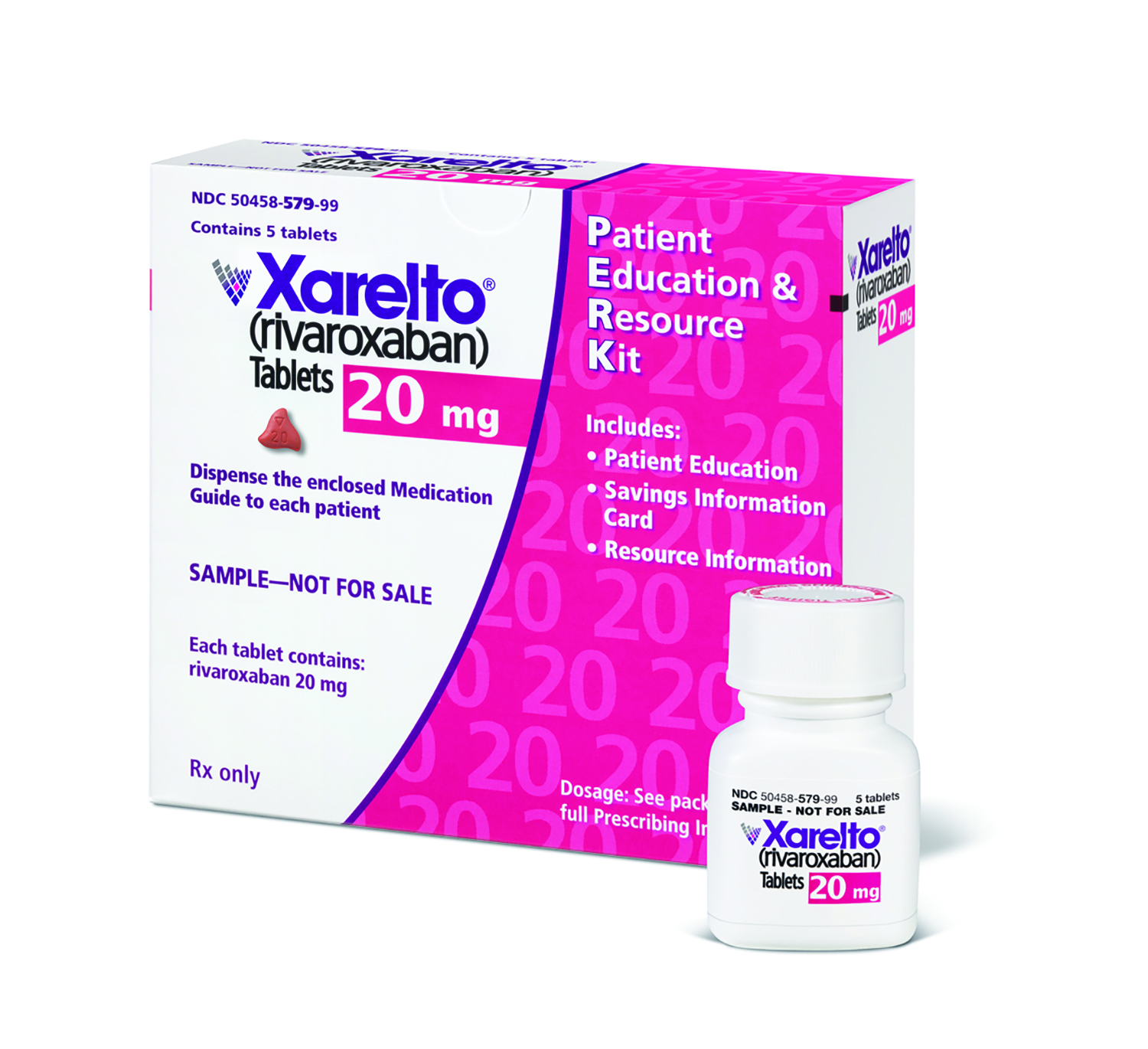
The blood thinner Xarelto achieved sales of €4.13 billion ($4.62 billion), an increase of 13.6 percent from 2018. In first-half 2020, the product generated €2.17 billion ($2.43 billion), an increase of 11.7 percent from first-half 2019. Management says sales grew largely as a result of higher volumes in China, Russia, and Germany. License revenues – recognized as sales – in the United States, where Xarelto is marketed by a Johnson & Johnson subsidiary, were up slightly year on year.
Eylea, for treating age-related macular degeneration and diabetic macular edema, was once again Bayer’s second best-selling drug, generating sales of €2.49 billion ($2.79 billion), 14.1 percent more than in 2018. Eylea sales in first-half 2020 were €1.16 billion ($1.3 billion), 2.2 percent less than in the same 2019 period. Management says sales of Eylea were down because of a reduced number of treatments, attributed to the closure of some eye hospitals and ophthalmology practices, and the extension of treatment intervals by patients due to the contact restrictions and stay-at-home measures in Europe. This development was partly offset by the launch of the Eylea prefilled syringe in Europe and Japan, and an overall volume increase in Japan resulting from changes in order patterns brought about by price reductions.
The Mirena birth control product family generated €1.22 billion ($1.37 billion) in 2019, 7 percent more than in 2018. Mirena sales in the first half of 2020 were €504 million ($564 million), down 18.6 percent versus the first half of 2019. The decline was because of substantially fewer product insertions, especially in the United States, with the pandemic causing many visits to the doctor to be canceled or postponed.
Once again fourth in sales was the hemophilia product line Kogenate, Kovaltry and Jivi, which posted €882 million ($987 million), 3.2 percent more than in 2018. Sales in first-half 2020 totaled €442 million ($495 million), 1.8 percent more than in the same period for 2019.
The cancer drug Nexavar had 2019 sales of €706 million ($790 million), down 0.8 percent versus 2018. Sales in the first half of 2020 were €332 million ($372 million), a decline of 8 percent from first-half 2019.
The birth control family of drugs Yaz, Yasmin and Yasminelle registered sales of €681 million ($762 million), 6.6 percent more than in 2018. Half-year 2020 sales were €335 million ($375 million), 2.8 percent more than in first-half 2019.
The diabetes drug Glucobay generated 2019 sales of €667 million ($747 million), 7.1 percent more than in 2018. First-half 2020 sales plummeted 54.4 percent to €156 million ($175 million). Management says this is chiefly due to the implementation of a volume-based procurement policy that involves a substantial price reduction, which cannot be offset by the resulting growth in volumes.
Sales of Adalat, for the treatment of hypertension, grew 8.7 percent in 2019 to €664 million ($743 million). In the first half of 2020, sales were €316 million ($354 million), an 8.4 percent decrease from first-half 2019.
Aspirin Cardio generated 2019 sales of €579 million ($648 million), 3.9 percent more than in 2018. First-half 2020 sales amounted to €316 million ($354 million), 6 percent more than in first-half 2019.
The multiple sclerosis drug Betaseron/Betaferon produced sales of €457 million ($512 million), 16 percent less than in 2018. First-half 2020 sales continued to exhibit a decline, to €214 million ($240 million), 3.2 percent less than in the same period for 2019.
Bayer’s Consumer Health business reported 2019 sales of €5.46 billion ($6.11 billion), 0.2 percent more than the 2018 total. Bayer says solid fundamentals of the growing, aging population and the self-care trend were supported by strong allergy, cough and cold seasons.
In the first half of 2020, Consumer Health sales were €2.6 billion ($2.91 billion), 8.4 percent less than in the corresponding 2019 period. According to management, after a very strong first quarter, the second quarter showed expected destocking by retailers and consumers, but the quarantine and protective measures introduced in various regions were also a key factor in the decline in sales.
Net sales of the Crop Science division for 2019 totaled €19.83 billion ($22.2 billion), 39 percent more than in the previous year. For the first half of 2020, the division’s sales were €11.64 billion ($13.03 billion), 3.6 percent more than in first-half 2019.
Pipeline, Collaborations
2019 and the beginning of 2020 had some stumbles for Bayer in the company’s R&D efforts. In July 2019, the company announced a clinical collaboration agreement with Bristol-Myers Squibb and Ono Pharmaceutical to evaluate the combination of the multikinase inhibitor Stivarga (regorafenib) and Bristol-Myers Squibb’s/Ono’s immuno-oncology treatment Opdivo (nivolumab) in patients with micro-satellite stable metastatic colorectal cancer (MSS mCRC), the most common form of mCRC.
In September 2019, Bayer decided to discontinue the development program for its anti-TFPI antibody BAY 1093884 for the treatment of hemophilia for safety reasons after a Phase II trial investigating the safety and tolerability of BAY 1093884 in patients with hemophilia A or B with or without inhibitors was halted ahead of schedule.
In January 2020, Bayer halted the development of its alpha2c AR antagonist fadaltran as the efficacy endpoints in the Phase IIa trial were not met.
In November 2019, Bayer opted to discontinue the development of the TASK channel blocker BAY 2253651 after it failed to demonstrate sufficient efficacy in the treatment of patients with obstructive sleep apnea in a Phase II trial.
But that same month, the company announced that the Phase III study VICTORIA evaluating the use of vericiguat in patients with chronic heart failure with reduced ejection fraction (HFrEF) had met its primary endpoint. Bayer executives say vericiguat reduced the risk of cardiovascular death or heart failure hospitalization versus placebo when given in combination with available heart failure therapies. Vericiguat is the first-in-class soluble guanylate cyclase (sGC) stimulator being developed to treat patients with worsening chronic heart failure. The drug is being jointly developed with Merck & Co.
There was more good news for vericiguat in July 2020, when the U.S. FDA accepted for priority review the New Drug Application for the drug to treat patients with symptomatic chronic heart failure with an ejection fraction less than 45 percent following a worsening heart failure event.
This regulatory submission was based on positive data from the Phase III VICTORIA study published in the New England Journal of Medicine in March. The FDA set a Prescription Drug User Fee Act target action date of January 20, 2021.
Another positive piece of news came in July, when Bayer announced that finerenone met its primary endpoint in the Phase III FIDELIO-DKD renal outcomes study in patients with chronic kidney disease and type 2 diabetes. The results show that the investigational drug finerenone delayed the progression of CKD by significantly reducing the combined risk of time to first occurrence of kidney failure, a sustained decrease of estimated glomerular filtration rate (eGFR) greater than or equal to 40 percent from baseline over a period of at least four weeks, or renal death. Finerenone significantly reduced the risk of the key secondary outcome, a composite of time to first occurrence of cardiovascular (CV) death, non-fatal myocardial infarction, non-fatal stroke, or heart failure hospitalization.
The FIDELIO-DKD study is part of the largest Phase III clinical trial program in CKD and T2D, which enrolled 13,000 patients across a broad range of disease severity including those with early kidney damage and more advanced stages of kidney disease. FIDELIO-DKD is a randomized, double-blind, placebo-controlled, parallel-group, multicenter, event-driven Phase III study investigating finerenone versus placebo in patients with CKD and T2D. The study included 5,700 patients from more than 1,000 sites across 48 countries. Patients were randomized to receive either finerenone 10 mg or 20 mg orally once daily or placebo when added to standard of care, including blood glucose lowering therapies and maximum tolerated dose of RAS-blocking therapy such as angiotensin-converting enzyme (ACE) inhibitors or angiotensin II receptor blockers (ARBs).
In May 2020, Bayer filed an application for marketing authorization for the precision oncology treatment larotrectinib to the Ministry of Health, Labor and Welfare (MHLW) in Japan. Larotrectinib is an oral TRK inhibitor that has been developed specifically to treat adults and children with locally advanced or metastatic solid tumors that have the rare genomic alteration called a neurotrophic tyrosine receptor kinase (NTRK) gene fusion. The product is approved in several countries under the brand name Vitrakvi, including the United States, Brazil, Canada and countries of the European Union. Filings in other regions are under way or planned.
The submission to the MHLW is based on data from the Phase I study of adults, the Phase II NAVIGATE study in adult and adolescent patients and the Phase I/II pediatric SCOUT trial. Larotrectinib was investigated across more than 20 different histologies of solid tumors including lung, thyroid, melanoma, gastrointestinal stromal tumors, colon, cholangiocarcinoma, soft tissue sarcomas, salivary gland, and infantile fibrosarcoma.
In March Bayer announced that the European Commission granted marketing authorization in the European Union for Nubeqa (darolutamide), an oral androgen receptor inhibitor (ARi). The compound, which is developed jointly by Bayer and Orion Corp., is indicated for the treatment of men with non-metastatic castration-resistant prostate cancer, who are at high risk of developing metastatic disease. Bayer is responsible for global commercialization, with a joint promotion of Bayer and Orion in certain European markets.
The EU approval is based on the pivotal Phase III ARAMIS trial data evaluating the efficacy and safety of darolutamide plus androgen deprivation therapy (ADT) compared to placebo plus ADT. Results demonstrated a highly significant improvement in the primary efficacy endpoint of metastasis-free survival (MFS) of darolutamide plus ADT, with a median of 40.4 months, versus 18.4 months for placebo plus ADT (p<0.001), and a favorable safety profile. Nubeqa is already approved in the United States, Australia, Brazil, Canada, as well as Japan and filings in other regions are under way or planned.
Bayer is involved in the global fight against COVID-19. During April, Bayer announced that the company’s Canadian organization, Bayer Inc. in Mississauga, Ontario, was partnering with the Population Health Research Institute (PHRI) in launching a major clinical research program aimed at identifying potential treatments against COVID-19. The two studies evaluated the safety and efficacy of different combination therapies including Bayer’s chloroquine and interferon beta-1b. Bayer made a financial commitment of CAD 1.5 million (€1 million) towards the studies and will supply study drugs to support the research. This adds to the CAD 0.5 million previously committed by the PHRI that enabled the development of the research program. The goal is to assess the value of these and other therapies rapidly so that the results can inform practice as soon as possible. PHRI planned to enroll 6,000 patients into the two studies from more than 60 contributing research sites across Ontario and internationally.
Among other development partnerships entered into by Bayer in 2020, in September the company announced an exclusive global license deal with Systems Oncology LLC for ERSO, a compound in pre-clinical development for treating metastatic estrogen receptor-positive (ER+) breast cancer. ERSO is a small molecule activator of the unfolded protein response (UPR) in ER+ breast cancer cells. ERSO’s differentiated mechanism of action offers significant potential to provide a meaningful novel treatment option for women with metastatic ER+ breast cancer, an area where new therapies are urgently required.
In preclinical studies, ERSO showed activity in ER+ breast cancer cells as well as activity on ER mutations conferring a resistance to standard treatments. ERSO’s mode of action of activating UPR in ER+ breast cancer cells offers a significant differentiation from current and potential upcoming anti-hormonal agents. In addition, the therapeutic potential of this novel mode of action in other tumor types is being investigated.
Bayer is responsible for developing and commercializing ERSO globally. Systems Oncology received an upfront payment of $25 million and is eligible to receive payments from Bayer upon achievement of certain development and commercialization milestones totaling $345 million.
Also in September, Bayer and U.S.-based Recursion Pharmaceuticals Inc., a digital biology company industrializing drug discovery, entered into a strategic collaboration deal. The partnership leverages Recursion’s purpose-built artificial intelligence-guided drug discovery platform and Bayer’s small molecule compound library and deep scientific expertise to discover and develop new treatments for fibrotic diseases of the lung, kidney, heart, and more. Leaps by Bayer, the impact investment arm of Bayer AG, is leading Recursion’s Series D financing with an investment of $50 million.
Recursion’s drug discovery platform combines highly automated, wet lab biology experiments as the base for iterative learning through its computational tools. The purpose-built drug-discovery platform is based on a proprietary library of over half a billion images of human cells from more than 33 million experiments conducted in-house at Recursion and coupled with advanced data analytics based on machine learning. Recursion has on-boarded over 750 cellular disease models to broadly interrogate diverse therapeutic areas.
Under the terms of the agreement, the parties may initiate more than 10 programs with possible development and commercial milestone payments of more than $100 million per program plus royalties on future sales. Bayer will gain the option to exclusively license novel therapeutics derived from the research activities. Bayer will contribute with its small molecule compound library and expertise in biology and medicinal chemistry. In addition to the $50 million equity investment, Recursion received an upfront payment of $30 million.
Bayer grew its capabilities in September by completing the acquisition of UK-based biotech company KaNDy Therapeutics Ltd. to expand the drug development pipeline in women’s healthcare. With the acquisition, Bayer is fully integrating KaNDy’s NT-814 compound into its women’s healthcare pipeline and plans to start Phase III development in 2021.
As previously announced, under the terms of the agreement Bayer is responsible for an upfront consideration of $425 million, potential milestone payments of up to $450 million until launch followed by potential additional triple-digit million sales milestone payments.
In February Bayer announced that it entered into a definitive agreement to transfer a large part of the company’s Berlin-based small molecule research unit to Nuvisan, an international service provider for clinical studies, laboratory services and contract manufacturing with several sites and clinics in Germany and France. The strategic partnership will lay the foundation for a brand-new research entity to be established by Nuvisan in Berlin. According to management, the partnership will also support Bayer’s increased focus on the flexibility and productivity of its R&D operating model.
The Berlin-based research unit with around 400 workplaces comprises a fully operational team specialized in small molecule research. The research center comes with capabilities and capacities spanning the entire drug discovery value chain, including lead discovery, medicinal chemistry, pharmacology, drug metabolism and pharmacokinetics, investigational toxicology, and animal management. Bayer will retain significant research activities in Berlin, which remains the headquarters for the company’s Pharmaceuticals Division and one of its major global research sites. The transaction was expected to close mid-2020 subject to successful completion of the consultation process with the employee representatives and the preparations for taking over the research activities.
In March, Bayer and Curadev Pvt. Ltd., a drug-discovery company based in India, announced a research collaboration and license deal for Curadev’s Stimulator of Interferon Genes (STING) antagonist program. The collaboration aims to discover new drug candidates for treating lung diseases, cardiovascular diseases, and other inflammatory diseases. STING antagonists offer tremendous potential for new treatments as STING is known to play a role in activating the innate immune system in auto-inflammatory diseases.
Curadev’s small molecule STING antagonist program aims to discover and develop inhibitors of the intracellular stimulator of interferon genes (STING) pathway, which can modulate the immune response associated with various auto-inflammatory diseases. As part of the agreement, Bayer gains exclusive access to novel molecules from Curadev that are designed to inhibit the STING pathway. The companies are collaborating to optimize and advance these molecules, as well as others generated during the collaboration, into clinical development.
Under the terms of the agreement, Curadev received an upfront payment. Curadev will receive research funding during the research term and might be eligible for pre-clinical, clinical and sales milestones of potentially over €250 million as well as royalties of single digit percentages of net sales.
In January, Bayer entered into three other collaborations. Bayer and Daré Bioscience entered into exclusive license agreement for U.S. commercial rights to the investigational hormone-free, monthly contraceptive Ovaprene. Daré received an upfront payment and access to Bayer’s clinical and market capabilities while retaining control over Ovaprene’s development and regulatory approval process. Bayer received the right to obtain exclusive rights to commercialize the product in the U.S. following completion of the pivotal clinical trial being undertaken by Daré.
The licensing option becomes effective with a payment of $20 million from Bayer to Daré. Daré might be eligible to receive commercial milestone payments potentially totaling $310 million as well as double-digit tiered royalties on net sales.
Bayer and Exscientia Ltd., a UK-based artificial intelligence (AI)-driven drug discovery company, entered into a three-year, multi-target collaboration. The partners are working on early research projects combining Exscientia’s proprietary AI drug discovery platform and drug design know-how with Bayer’s data and drug discovery capabilities. They aim to identify and optimize novel lead structures for potential drug candidates to treat cardiovascular and oncological diseases. Exscientia may be eligible to receive up to €240 million, including upfront and research payments, near term, and clinical milestones. As part of the agreement, Exscientia may also receive sales royalties. Bayer owns the rights to novel lead structures generated as part of the collaboration, which focuses on early-stage research by using an AI-based algorithm to predict potential drug molecules.
Evotec SE and Bayer announced the expansion of their partnership in women’s health indications with a new five-year, multi-target collaboration to develop multiple clinical candidates for treating polycystic ovary syndrome. Both companies are contributing drug targets and a comprehensive set of high-quality technology platforms to jointly develop innovative treatment options. The strategic alliance also has access to targets from the recently formed partnership between Celmatix Inc. and Evotec. Celmatix is the world leader in big data-driven target discovery focused on fertility and women’s health.
Bayer and Evotec are sharing responsibilities during the pre-clinical development of potential clinical candidates. Bayer is responsible for any subsequent clinical development and commercialization. Evotec receives a €6.5 million upfront payment and €10 million research payments over five years. Evotec may be eligible to receive pre-clinical, clinical and sales milestones of potentially over €330 million and royalties up to low double-digit percentage of net sales.

