


Image copyright
BandLab Singapore
As an already reeling music industry is hit by the coronavirus, the owner of UK publication NME says the pandemic has brought challenges and opportunities.
Singapore-based BandLab also owns music brands ranging from guitar-making to retail and digital platforms.
The virus came at a time of already seismic change for the industry as firms seek new ways to make profits.
In recent years, the recording industry has been revolutionised, while instrument and magazine sales fell.
The last two decades have seen the business model of traditional record labels massively disrupted by digital downloads, while the market for musical instruments and magazines has been hit by radical changes in consumer behaviour.
As the coronavirus pandemic compounded this already hostile business environment, many companies in the music industry have seen their businesses hit hard.
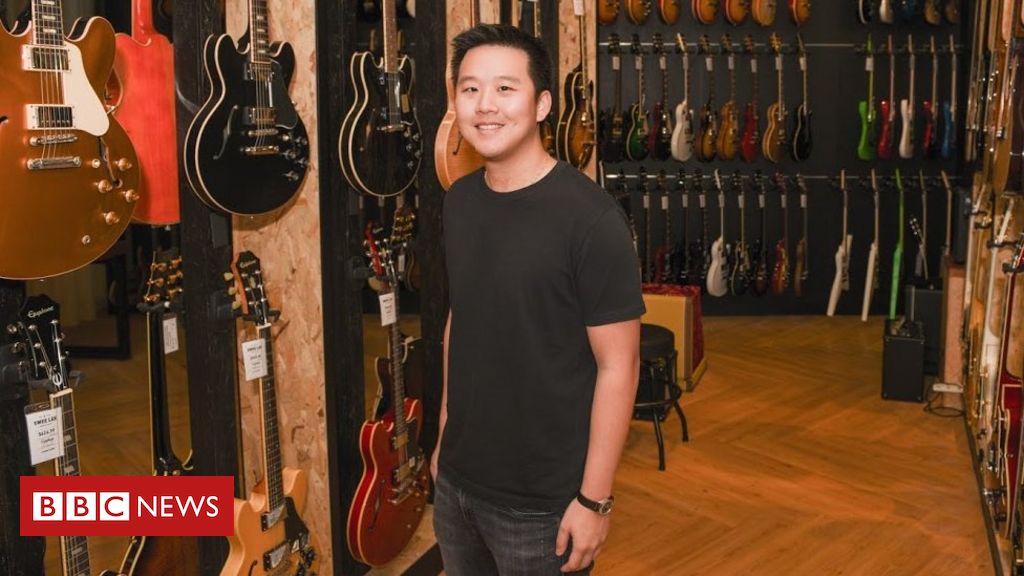
BandLab’s chief executive, Meng Ru Kuok, says that while parts of his music-focused firm have faced coronavirus-related disruptions, other areas of the business have thrived.
He says that during the pandemic, his music equipment retail business has seen its best performance since he bought it in 2012, as social distancing measures mean people have had more free time.
“We’ve seen a 300% rise in monthly sales at our South East Asia music instrument retailer, Swee Lee,” he said.
Print vs digital
Some of BandLab’s most high-profile investments have been in music journalism, an industry that has been turned upside down by internet-driven changes in how people consume news.
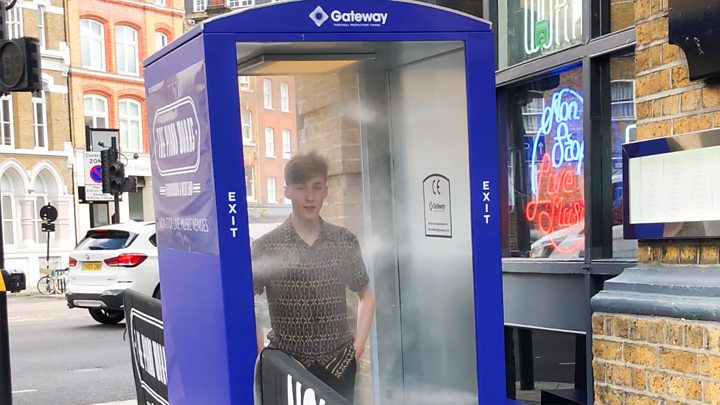
Although the live entertainment and publishing industries have been hit hard by the coronavirus, NME – which BandLab bought in 2019 – was launched in South East Asia last month.
Media playback is unsupported on your device
That announcement came after NME entered the Australian market at the end of last year.
Even as plummeting advertising revenues and circulation numbers force increasing numbers of publications to abandon print, NME has recently restarted physical publishing with a monthly magazine in Australia, its only current regular print edition.
Mr Kuok says he has a sense of duty to protect the NME’s legacy: “We feel there is a responsibility not just to the brand, but also there is a responsibility of being a credible brand.”
And he hinted at new NME-related launches both in the UK and internationally, with announcements expected later this year and in early 2021.
The company bought a 49% stake in US rock magazine Rolling Stone in 2016, but sold that holding less three years later after failing to buy the rest of the business.
Mark Mulligan from MIDiA Research sees potential for NME as a digital brand: “When NME went fully digital, it was seen by many as the demise of the brand. But of course, in the digital era, print can actually be a hindrance, reducing your ability to reach truly global audiences.
“BandLab has an opportunity to entirely re-imagine the brand for a new generation of music fans, with a global reach it previously lacked,” he added.
Image copyright
NME
NME launched in South East Asia in August
Digital growth
At the same time as BandLab is continuing to expand NME, it is also seeing significant growth in users of its digital music production platform, Cakewalk.
“Today we have more than 22 million people who are using our product around the world. More than eight million songs are being recorded and released a month on the platform,” he said.
In another sign of how the music industry as a whole is having to adapt to the new normal of social distancing, BandLab is this weekend holding a virtual guitar show.
Guitar.com Live is a three-day event combining a trade show with interviews, panels, workshops and performances by world-famous guitarists.
Jamie MacEwan from Enders Analysis said: “A music business like BandLab that connects people with digital production tools and live streaming is well placed to grow its user base under lockdown.
“Using the NME brand to reach enthusiasts around the world is a solid strategy. My question would be, how does BandLab intend to monetise and build on its business from here?”
Coronavirus disruptions
The pandemic has also caused significant disruptions in BandLab’s group of businesses.
Uncut, another UK-based music magazine owned by BandLab and the firm’s only newsstand-focused product, saw its sales take a hit as people stayed at home because of Covid-19.
Meanwhile, the firm’s US-based guitar manufacturers, Heritage and Harmony, were forced to suspend production for eight weeks owing to lockdown measures.
Production has now restarted and the company says it has seen a surge in orders, which it is now working to meet.
Image copyright
BandLab Singapore
Meng Ru Kuok founded BandLab Technologies in 2016
As the son of Kuok Khoon Hong, the chairman and chief executive of Asia’s leading agricultural production group Wilmar International, he is often asked about his billionaire father.
While the younger Mr Kuok is quick to point out that his company is separate from the family business, he is also keen to highlight the debt he owes for the guidance he has received over the years.
A key piece of advice he says he always keeps in mind is: “When things are going well, don’t be too happy. When things are going badly, don’t be too sad.”
From Muse to the blues
So which artists does a music entrepreneur like Mr Kuok listen to when he’s not working?
He nods to his parents encouraging him to learn the violin and piano as a child, but credits his time at one of Britain’s top public schools, Winchester College, and then Cambridge University for his love of guitar music.
Growing up listening to British indie bands such as Radiohead and the Libertines, he says his favourite band in his youth was alternative rock group Muse.
But now his tastes have matured to include one of the great American bluesmen: “My favourite artist is BB King.”
“He is someone who has a personality, had trouble in his life and he played to his very last day. Incredibly hard working and had the respect of the entire industry.”

