


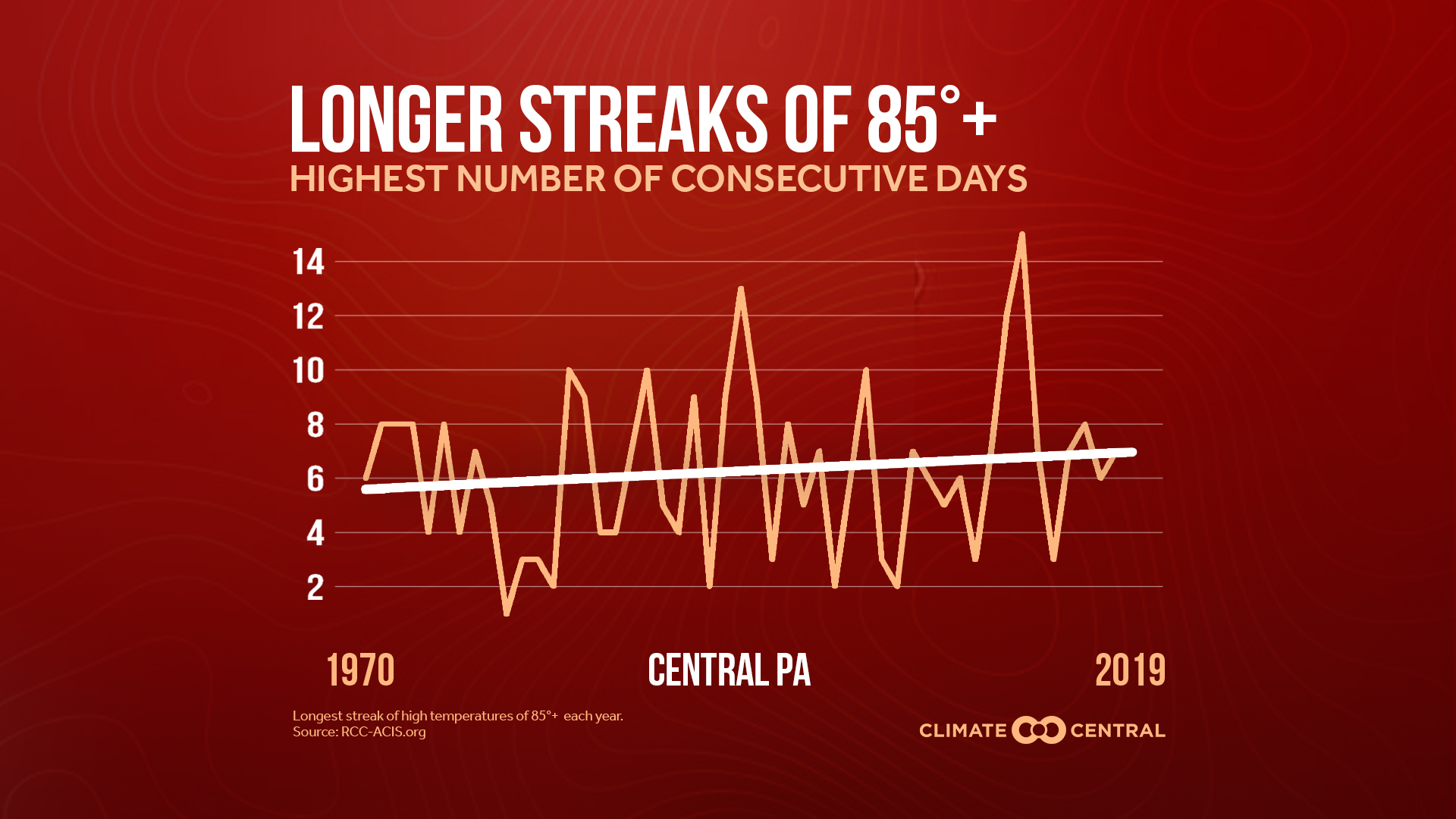
By the time August rolls around, much of the U.S. has passed what is typically their ‘hottest day’ of the year, trading the more intense heat of July for the sultry, hot stretches of August. Prolonged spells of heat are an important symptom of our changing climate because of their impact on our health. Extreme heat is taxing on our bodies, particularly when we’re exposed to long bouts and have less opportunity to recover.
Our analysis of ‘heat streaks’, or the number of consecutive hot days, shows that much of the country is experiencing longer stretches of extreme heat compared to fifty years ago. Of the 242 cities analyzed, 74% (180) recorded an increase in their longest heat streak of the year, with 41% (99) reporting an increase of at least two days. Of the top ten cities recording the biggest increases, nine were in Texas and all had increases of more than ten days.
Extreme heat presents a mounting challenge to public health, particularly as longer bouts of heat and warmer nights mean more stress on the body and potentially loss of sleep, too. Many U.S. cities are implementing novel heat adaptation strategies. These strategies are especially important for low-income communities, outdoor workers and communities of color who are often more exposed to extreme temperatures and have less access to air conditioning. For those with access, future air conditioning usage is expected to surge in response to the increasing cooling demand. Increased energy consumption for cooling underscores the importance of transitioning to clean energy sources. If we go on powering our air conditioners on fossil fuels, our climate will only get hotter! Breaking out of this vicious cycle and cutting emissions is the best way to get our warming climate to ‘chill out.’
METHODOLOGY
Data was gathered via the Applied Climate Information System. Cooling degree days were calculated using the sum of the daily cooling degree days each year. Change in the number of days is based on linear regression. Climate Central’s local analyses include 244 stations. However, for data summaries based on linear trends, only 242 stations are included due to large data gaps in St. Johnsbury, Vermont and Wheeling, West Virginia.

