


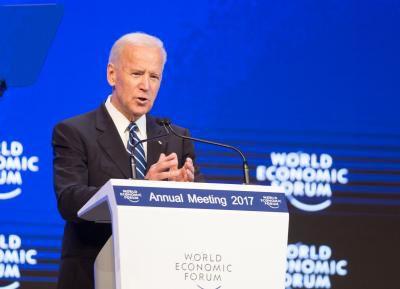
I have been an early supporter of Joe Biden, right from summer of 2019, when few gave him a chance in the crowded Democratic primaries. While many of his detractors point to his advanced age and his past political missteps, I see Joe Biden as one of the torch bearers of a species on the brink of extinction—the generation of elder statesmen, like his good friend former Senator John McCain, Congressman John Lewis, and his own former boss, President Barack Obama. Leaders for whom courage, personal integrity, and empathy matter. I believe that Joe Biden is the leader we need in the White House, especially during this period when we grapple with multiple major crises, trust in establishment is at a low ebb, and America’s leadership role in the world is in question.
Therefore, I was one among the hundreds of thousands of Indian Americans (not to mention the millions of Indian citizens) who were disappointed with the policy position on India announced by the Biden campaign. In the policy paper on Muslim Americans, Joe Biden wants New Delhi to take necessary steps to restore rights of all Kashmiris and has expressed disappointment over the Citizenship (Amendment) Act as well as the implementation of the National Register of Citizens in Assam.
There are media reports about the implementation of the Kashmir policy, CAA and NRC that is not in keeping with India standing as open, pluralistic, and democratic society. However, I believe that Biden has been ill advised on taking a hard line on the India policy. First, Kashmir is very complex issue that dates back to pre-independent India and is rooted in the distrust between Hindus and Muslim sowed by the divide and conquer policy of the British. It is worth recalling that since partition in 1947, India and Pakistan, both nuclear powers have fought four wars and had countless border skirmishes. Some experts believe that the Indo-Pakistan issues is more complex than the Israel-Palestine conflict with almost every issue having many shades of gray to it. Second, an uncalled for anti-India policy position like this runs the risk of rubbing well intentioned people the wrong way some of the time, resulting is no net political benefits.
Given this reality, it does not help a presidential campaign to weigh in especially given the many social, racial and economic justice inequities that the U.S. is grappling with. The Indian American community leaders I spoke to seem to think that this policy is an attempt by some on the Biden campaign staff with conflicting interests, to try to appease one religious group. The question is, at what expense? Indian Americans bring up the legitimate question of the interests of the other stakeholders involved in Kashmir. These include Kashmiri Pundits (Hindus) who were driven out of their ancestral homeland by Islamic fundamentalist; the people of India whose taxes and subsidies have sustained the terrorism shattered Kashmir economy for the past four decades; and the thousands of Indian military personnel who have made the ultimate sacrifice protecting the border of India with Pakistan occupied Kashmir from repeated terrorist incursions planned and sponsored by the State of Pakistan.
Earlier this spring, I teamed up with two fellow Biden supporters, both of whom live in swing states and have deep roots in the Indian American community, to investigate the issue of the shifting support of Indian American voters towards Trump, especially among the older immigrant population which maintain close ties with India. We reached out and spoke to 16 leaders of large Indian American organizations with members all across the country.
Our findings strongly confirmed the anecdotal evidence leading us to the following conclusions: 1) Due to the openly hostile anti-India stand of many left leaning Democratic party leaders, including a few Indian American elected officials, there is a widely held perception that their policy position is also shared by the Biden campaign; 2) While most Indian Americans disapprove of Trump on policy matters like immigration, gun control, climate change, on his ham-handed handling of the Covi-19 crisis, and also on moral grounds, they feel overall he is better for India, due to his firmer stand on Pakistan sponsored terrorism and his good relationship with PM Modi; 3) The perception, however mistaken, persists that Trump is better for the pocketbooks of the Indian American community due to his tax cuts; 4) As the result of the factors listed above, it is estimated that for the 2020 presidential elections, there will be a 15-20% shift of the traditionally 70-30% Democratic leaning Indian American voters towards Trump, making the balance closer to 50-50%. In most swing states this translates to between 30k to 100K votes moving over the Republican column, with the potential to influence the outcomes in some districts in states like Michigan, Texas, and Ohio where Indian Americans reside in greater numbers in a few counties.
We discovered that the older generation of Indian Americans did not identify with the South Asian American or the AAPI classification that the campaign had boxed them into. As one community leader put it: “South Asian is a modern construct based on political correctness. It has limited social, cultural or emotional meaning for my family and friends.”
Most of the existing pro-Biden political support groups cater to a younger demographic (who are mostly pro-Democrats anyway) and quite understandably do not fully understand the nuances of the Indian American immigrant voters. It will help if the Biden campaign creates an Indian American focus group, adds more leaders from the Indian American community, and engages more actively with the large immigrant Hindu voters in swing states. They are a crucial voting block who will help elect the next president of United States and the India policy of the candidate is a critical consideration. Therefore, the revelation of the India policy by the Biden campaign at this inopportune time only adds fuel to the fire.
Yet, Indian Americans, who have made America their home, will have to factor in other political considerations that are U.S.-centric. This bring into question issues such as the health of our democracy and its pillar intuitions, the American leadership on the world stage, climate change, social and economic equity, racial justice, and the tone of our political discourse. On all these fronts former Vice President Joe Biden is far and away the better candidate to be the next president of the United States. Biden has a track record of working on issues impacting India, such as trade and cross border terrorism. The deadly pandemic sweeping the nation has done us one good turn—it has revealed the gross incompetence of Donald Trump and has bolstered the prospects for Joe Biden. Assuming Biden wins, given his track record to be thoughtful and reflective on policy issues, I am hopeful that after he walks into the White House on Jan. 20 2021, he will reassess the US-India Policy and build upon the already strong foundation of the US-India relationship.
(Note: Suresh Kumar is an Inc. 500 ranked serial entrepreneur and professor of Practice at NJIT. He is a longtime Indian American community activist and serves as committeeperson of the Middlesex County Democratic Organization, NJ. He served as the national communications co-chair of South Asians for Biden from October 2019 till May 2020.)

