


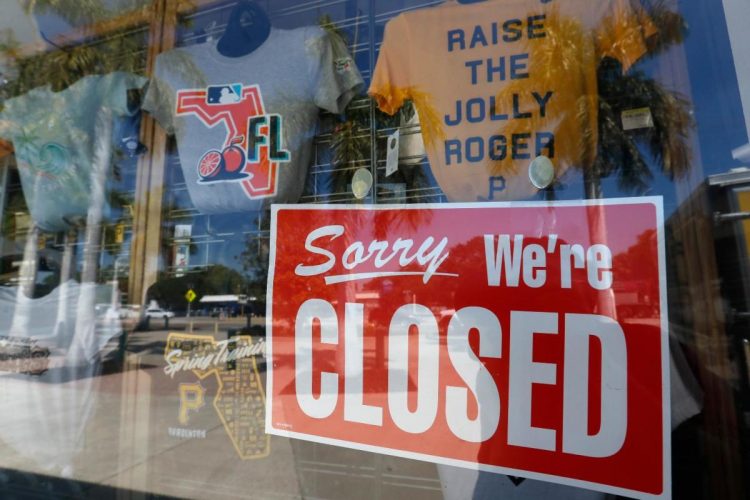
Consumer sentiment plummeted in March, according to a new report that suggests the central pillar of the U.S. economy – consumer spending – is likely in for a steep decline.
The University of Michigan’s popular consumer sentiment tracker dropped nearly 12% in March – its fourth-largest one-month decline in nearly 50 years, according to data published on Friday. The deepening financial crisis in October 2008, Hurricane Katrina in September 2005 and a recession in 1980 are the only three times in modern history that the index plunged more severely in the span of just a month.
The tracker is among the first few economic indicators to preview exactly how severely the coronavirus pandemic will hit the U.S. economy. Jobless claims suffered a historic spike last week, but delays in government data reporting have otherwise left analysts biding their time until a storm of bad news makes landfall.
The economy’s skies got a little bit darker with Friday’s consumer sentiment report.
“The extent of additional declines in April will depend on the success in curtailing the spread of the virus and how quickly households receive funds to relieve their financial hardships,” Richard Curtin, chief economist at the university’s Surveys of Consumers polling hub, said in a statement on Friday. “Mitigating the negative impacts on health and finances may curb rising pessimism, but it will not produce optimism.”
The index is made up of two main components: metrics measuring how consumers feel about the current state of the economy and their expectations for what’s in store down the road. Both plummeted to their lowest points since October 2016 – the month before President Donald Trump defeated former Secretary of State Hillary Clinton in the most recent presidential election.
If sentiment continues falling at its most recent seven-day average, Curtin said April could end up being the worst month for consumer sentiment in decades as unemployment rises and incomes stagnate.
“Disbelief in the extent of the problem persisted into early March and it took awhile for reality to set in,” Joel Naroff, president and chief economist at Naroff Economics, wrote in an email on Friday. “If the economy continues to be shut down through April, as expected, look for another twenty point or more drop in sentiment. That would be the largest decline on record and would likely take the index into deep recession range.”
Analysts widely associate drops in consumer confidence with diminished consumer spending. Reduced consumption is to be expected, to some extent, as businesses across the country shutter their doors to prevent the spread of a virus that has already sickened more than 86,000 Americans, killing at least 1,300, according to the latest data from Johns Hopkins University.
But a less optimistic U.S. consumer spells trouble for gross domestic product expansion in the months ahead. Analysts are widely predicting the country will fall into a short but steep recession that is essentially self-inflicted in a bid to slow the pandemic’s spread.
“The slip is the latest affirmation that consumer spending will be facing remarkable and truly unprecedented headwinds as large swaths of the country get used to social distancing and either by choice or by law, remain at home,” a team of researchers at Wells Fargo Securities wrote in a research note on Friday, forecasting the single largest decline in personal consumption on record during April, May and June.
“This is the inevitable result of what happens when you slam the brakes on the economy by having everyone hole-up in their homes to keep them safe,” they wrote.
Congress on Friday advanced its third coronavirus relief bill to Trump’s desk, and the Federal Reserve has returned to financial crisis-era monetary policy to keep credit flowing and jump-start the economic recovery once the country is through the worst of the pandemic. Policymakers have for weeks been attempting to blunt the severity and duration of the inevitable downturn, and the stimulus checks included in the latest congressional aid package are expected to help consumers weather the next few months.
But without an optimistic consumer base as layoffs mount and uncertainty pervades, experts believe the economy’s short-term prospects look grim.
“We are in the early stages of this crisis and are only now beginning to see its severity in the economic data,” the Wells Fargo researchers wrote. “The truth is, no one knows what lies ahead in terms of the virus’ spread or precisely when the economy will ‘re-open.'”
