


Dive Brief:
-
To maintain leadership in climate and energy, the U.S. must triple its investment in clean energy innovation, provide $1 billion in annual funding to the Energy Department’s Advanced Research Projects Agency-Energy (ARPA-E) program, and establish new programs to foster the development and adoption of new technologies, according to a letter by the American Energy Innovation Council (AEIC).
-
During a panel discussion hosted by the Bipartisan Policy Center, AEIC members and energy executives came to a consensus that research dollars would be best spent if focused on developing green hydrogen and carbon capture technologies.
-
Citing the rapid development of a COVID-19 vaccine, Chad Holliday, chair of the board of Royal Dutch Shell, said the past year has proven what could be accomplished “if we really put our minds to” decarbonizing the economy. “We’ve been talking about this for decades,” he said. “Somehow we need to get together and make that happen.”
Dive Insight:
Decarbonization by 2050, according to U.S. Rep. Lizzie Fletcher, D-Texas, is now a bipartisan goal within the legislature, with lawmaking in the works for 2021 and, possibly, before the end of this year. But while she said she believes the 2050 goal is possible, she told members of a Bipartisan Policy Center panel that it remains to be seen just how the goal will be achieved.
The U.S. has “substantially” reduced carbon emissions using technologies that didn’t exist ten years ago, Fletcher said. “So looking to 2050, we don’t know everything we are going to see, but we do know we need creative thinking.”
But her fellow panelists, while optimistic about the prospects for several new technologies, also warned that the U.S. has not provided sufficient support or leadership at the federal level to enable the energy transformation that stopping climate change requires.
“A country is going to lead this,” Holliday said. “We have all the tools for it to be us. If it’s not us, it’s going to be China, so there’s a real sense of urgency. We don’t want to miss this window. We’ve missed a few recently, and we don’t want that to happen again.”
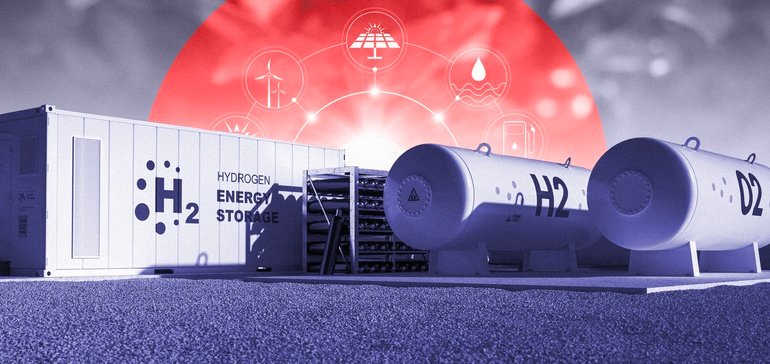
To avoid spreading itself too thin, Holliday said, the U.S. and industry should focus their attention on a handful of promising technologies. He and other members of Thursday’s panel agreed that green hydrogen and carbon capture were the two areas that would most benefit, and that had the most to offer, if made the focus of a national strategy.
“Renewables are now clearly able to compete with fossil fuels, and we’re seeing huge improvements in storage,” said Geisha Williams, a member of Siemens Energy Board and former CEO of the Pacific Gas and Electric Company. “The next big nut to crack is hydrogen.”
Hydrogen and carbon capture have been part of the discussion around clean energy for decades, but actual innovation in these fields has died on the vine in a dynamic Norman Augustine, a member of the Bipartisan Policy Center’s board and former CEO of Lockheed Martin, called the “valley of death.” In electronics and computing, he said, leaders talk about the valley of death as the span between having an idea in a laboratory, and developing a working prototype. The energy industry, he said, is subject to a second valley of death between prototyping and commercialization.
“In the energy world, having a working prototype is a long way from having an operation in the field that is financially effective,” Augustine said. “ARPA-E does an excellent job on the first valley of death. The second — no one company can afford to take a technology through that valley.”
This second valley of death means government support is needed more in the energy sector than in most other industries, Augustine said. However, he said the U.S. government has failed to provide needed leadership and focus in energy innovation.
“Our government doesn’t have a central energy plan,” he said, “and hasn’t had one for some time. We don’t even have a capital budget. I know of no successful company without a capital budget.”

